Cool Machine Components Makers pictures

Some cool machine parts manufacturers images:

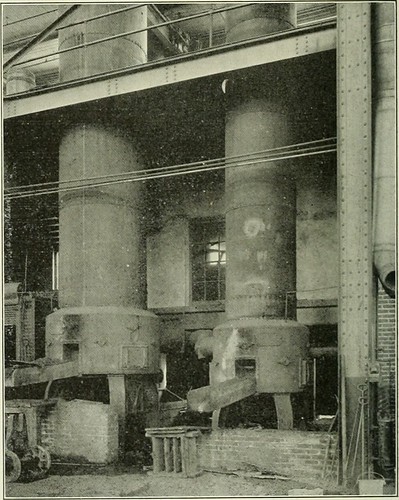
Image from web page 90 of “The Crossley Machine Co. (Incorporated), manufacturers of clay functioning machinery : pottery, electric porcelain, tile producing, clay washing and crucible machinery.” (1918)

Image by Internet Archive Book Images
Identifier: crossleymachinec00cros
Title: The Crossley Machine Co. (Incorporated), producers of clay operating machinery : pottery, electric porcelain, tile making, clay washing and crucible machinery.
Year: 1918 (1910s)
Authors: Crossley Machine Co.
Subjects: Crossley Machine Co.–Catalogs. Clay industries–Equipment and supplies–Catalogs.
Publisher: Trenton, N.J. : Crossley Machine Co.
Contributing Library: Rutgers University Libraries
Digitizing Sponsor: Lyrasis Members and Sloan Foundation

View Book Web page: Book Viewer
About This Book: Catalog Entry
View All Images: All Images From Book

Click here to view book on the web to see this illustration in context in a browseable online version of this book.

Text Appearing Prior to Image:
Parts CARRIED IN STOCK.Produced IN TWO SIZES ONLY, A and B 2 c7) Weigh! ExportWeight Size of Receiving and Size ofDischarge Pipes Brass Valve Pressure AB 95 lbs.100 lbs. 150 lbs.150 lbs. two in. two in. dia.2 in. 2H in. dia. 80 to 10080 to one hundred TRENTON, NEW JERSEY 87 Over-Flow or Relief Valve

Text Appearing Soon after Image:
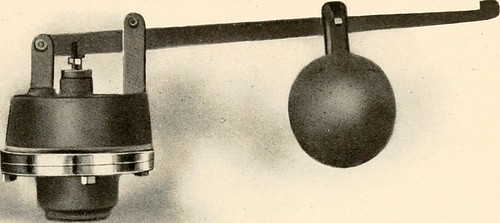
This security valve is specially made forclay or heavy and gritty substances. The plungerand rings are made of brass with rubber seats. Itis utilized in connection with our clay pumps forregulating the pressure of the liquid clay in thefilter presses. We make these security valves in three sizes,of the following dimensions: Size Weight ExportWeight Size of Receiving andDischarge Pipes Variety ofPressure No. 1No. 2No. 3 25 lbs.35 lbs.85 lbs. 50 lbs.one hundred lbs.150 lbs. K in. pipeIK in. pipe2 in. pipe five to 80 lbs.ten to 80 lbs.20 to 80 lbs. 88 THE CROSSLEY MACHINE CO. Hand Whirlers The hand whirlers shown on opposite page are madewith the very best supplies and workmanship, and will hefound to be effectively balanced and effortlessly revolved. The stepat bottom of spindle can be adjusted to enable for anywear that may possibly take place in the spindle. The bench whirler is fastened to a bench by meansof wood screws, which hold it completely rigid and allowit to function freely. The sagger makers whirler is, as its name implies,us

Note About Photos
Please note that these pictures are extracted from scanned page photos that may have been digitally enhanced for readability – coloration and look of these illustrations might not completely resemble the original work.

Machine Room Cubicle

Image by tj.blackwell
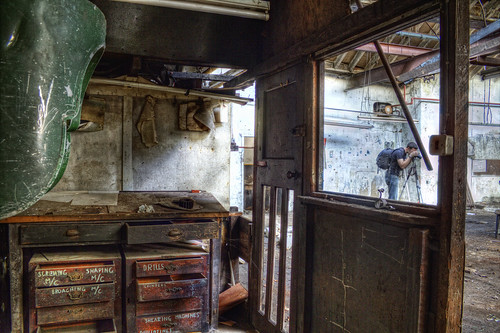
This wooden compartment, its glass windows extended given that smashed, lies adjacent to the major metalworking space of the Industrial Works mill. It appears to have been utilised as a sort of functional admin room to shop plans for the machine components that had been presently in production on the lathes. It also contains a battered old phone booth, which is the green object at the leading left of this image.

Cool Grinding Stainless Steel images

A handful of good grinding stainless steel pictures I located:

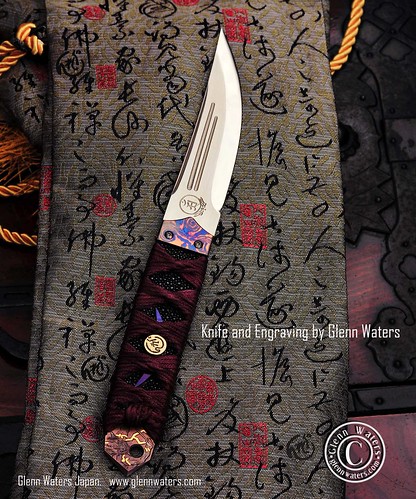
FuJin RaiJin Fighter.Reverse side. Created by Glenn Waters. SOLD. More than eight,000 views of this photo.

Image by Glenn Waters ぐれんin Japan.
This it the very first knife I have produced in over five years.

After my motor bike accident I couldn’t make knives for some years and then progressively lost the want to make them.
Now I am back and inspired. This is the 1st of many.

About the knife. The blade material is an exotic stainless steel by Hitachi. It is a san mai (Sandwich) of ATS-34 on the outside and ZDP-189 on the inside.

First I ground and shaped the blade soon after which I engraved it with the God of Wind &quotFuJin&quot on the front and the God of Thunder &quotRaiJin&quot on the back.

Then the blade was heat treated to a RC 67 hardness for the inner steel. Next the blade was polished untill 60,000 grit diamond. Very fine &quotMicro Mirror Polish.
Right after that I inlaid 24k gold and heat coloured it.
Then black sting ray skin was attached and bound with silk.
The bolsters are created from Titanium Damascus (Timascus). The menuki (handle inserts) are produced of titanium and 18k gold and engraved with bonji (buddhist script) on the front.

Ultimately I took this photo with a Nikon D700 and the superb Nikkor 85mm f/1.4G lens.

Korean War Memorial

Image by StarrGazr
From 1950 to 1953, the United States joined with the United Nations forces in Korea to take a stand against what was deemed a threat to democratic nations worldwide. At war’s finish, a million and a half American veterans returned to a peacetime world of households, houses, and jobs – and to a country long reluctant to view the Korean War as one thing to memorialize. But to the guys and females who served, the Korean War could in no way be a forgotten war.
The passing of much more than 4 decades has brought a new point of view to the war and its aftermath. The time has come, in the eyes of the Nation, to set aside a location of remembrance for the people who served in this difficult-fought war half a world away. The Korean War Veterans Memorial honors these Americans who answered the contact, these who worked and fought beneath the most trying circumstances, and these who gave their lives for the lead to of freedom.

A War Half a Globe Away

Only 5 years had passed given that the end of World War II when the United States when once more found itself embroiled in a key international conflict. In the early morning hours of June 25, 1950, the communist government of North Korea launched an attack into South Korea. Determined to help the world’s imperiled democracies, the United States quickly sent troops from Japan to join these already stationed in Korea they fought with other nations under the U.N. flag. What was envisioned as a brief, decisive campaign became a prolonged, bitter, frustrating fight that threatened to explode beyond Korean borders. For 3 years the fighting raged. In 1953 an uneasy peace returned by implies of a negotiated settlement that established a new boundary close to the original a single at the 38th parallel.
One-and-a-half million American guys and girls, a correct cross-section of the Nation’s populace, struggled side by side in the course of the conflict. They served as soldiers, chaplains, nurses, clerks, and in a host of other combat and support roles. Several risked their lives in extraordinary acts of heroism. Of these, 131 received the Congressional Medal of Honor, the Nation’s most esteemed tribute for combat bravery.

A Spot for Reflection

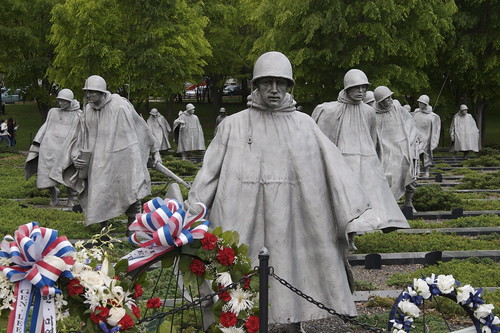
Viewed from above, the memorial is a circle interesected by a triangle. Visitors approaching the memorial come 1st to the triangular Field of Service. Here, a group of 19 stainless-steel statues, developed by Globe War II veteran Frank Gaylord, depicts a squad on patrol and evokes the expertise of American ground troops in Korea. Strips of granite and scrubby juniper bushes recommend the rugged Korean terrain, even though windblown ponchos recall the harsh weather. This symbolic patrol brings together members of the U.S. Air Force, Army, Marines, and Navy the men portrayed are from a assortment of ethnic backgrounds.
A granite curb on the north side of the statues lists the 22 nations of the United Nations that sent troops or gave medical assistance in defense of South Korea. On the south side is a black granite wall. Its polished surface mirrors the statues, intermingling the reflected photos with the faces etched into the granite. The etched mural is primarily based on actual photographs of unidentified American soldiers, sailors, airmen, and marines. The faces represent all these who supplied assistance for the ground troops. With each other these pictures reflect the determination of U.S. forces and the numerous ways in which Americans answered their country’s contact to duty.

The adjacent Pool of Remembrance, encircled by a grove of trees, gives a quiet setting. Numbers of those killed, wounded, missing in action, and held prisoner-of-war are etched in stone nearby. Opposite this counting of the war’s toll one more granite wall bears a message inlaid in silver:
Freedom Is Not Cost-free.

Establishment and Dedication

On October 28, 1986, Congress authorized the American Battle Monuments Commission to establish a memorial in Washington, D.C., to honor members of the U.S. armed forces who served in the Korean War. The Korean War Veterans Memorial Advisory Board was appointed by President Ronald Reagan to advocate a website and design and style, and to raise building funds. Ground was broken in November 1993. Frank Gaylord was chosen as the principal sculptor of the statues and Louis Nelson was selected to develop the mural of etched faces on the wall. On July 27, 1995, the 42nd anniversary of the armistice that ended the Korean War, the memorial was committed by President William J. Clinton and Kim Young Sam, President of the Republic of Korea.

Visiting the Memorial

The memorial is staffed from 8 a.m. to midnight each and every day of the year except December 25 by park rangers who are obtainable to answer questions and give talks. A bookstore in the nearby Lincoln Memorial sells informational items relating to each the memorial and the Korean War.
The Korean War Veterans Memorial is element of the National Park Technique, one particular of a lot more than 370 parks representing our nation’s all-natural and cultural heritage. Address inqueries to: Superintendent, National Capital Parks-Central, 900 Ohio Drive, SW, Washington, DC 20024-2000.

High-Speed Chases, Airport Takeover on Council Agenda Tonight

High-Speed Chases, Airport Takeover on Council Agenda Tonight
At an informal work session Monday, Kristen Blanchard, an attorney for the City, recommended adding the word "unlawful" to the resolution because cross-jurisdictional chases are lawful under the hot-pursuit doctrine. #That doctrine gives law …
Read more on Jackson Free Press

Precision Valley Survivor: Lovejoy Tool Co.
Garfield and Pr ie stley can detect the gears grinding in a visitor's head thinking about how the Tsugami is a classic example of automation displacing factory worker jobs, one of the reasons behind the collapse of Springfield and the Connecticut River …
Read more on Enterprise

Prep wrestling: Lebanon wins inaugural Papé Linn County Championships
“I just kept the pressure on him and kept grinding the whole time,” Miller said. “I broke him mentally and physically and just wore him out with all that pressure. That's what you have to do with any match, just keep your head in the game and keep the …
Read more on Albany Democrat Herald

MARC-ET WATCH: The Death of Big EDM, The Future of Food, and Apple&#39s Auto Troubles

MARC-ET WATCH: The Death of Massive EDM, The Future of Meals, and Apple&#39s Vehicle Troubles
Although numbers have not been produced public relating to losses, roughly 190,000 festival refunds were given for tickets (including service, shipping and payment fees) parking, shuttle, locker fees, and VIP-level upgrades. Publicly traded SFX stock has …
Read far more on Random Nerds

Hauz Khas Village is dead. Welcome Starbucks
It did have a lakeside view as well, but it also had complete course meals and a guarantee of getting capable to consume with no EDM music playing. The ambience was effortless, just … This was a competitive service, one particular you would get if you paid for it. HKV is a bit …
Read a lot more on DailyO

Lastest Cnc Edm Wire Reduce News

Optimised CAD, CAM and mould updates for software
03/18/2015 – UK – Visi CAD/CAM&#39s simulation capability ensures Bromley Sports has the mould and toolpaths ready for accurate and collision-totally free machining ahead of they start to reduce metal. By Stewart … CAM updates cover 2D, 3D, multi-axis, and wire EDM.
Study far more on ETMM On the internet

Dual-Head Sinker EDM reduces tool build time for massive molds.
A world leader in sophisticated CNC machining centers, Makino is committed to providing high-overall performance, leading-edge machining technologies and revolutionary engineered procedure options that enable manufacturers to concentrate on producing what matters. Makino …
Read a lot more on ThomasNet News (press release) (weblog)

Cool Grinding Service pictures

Check out these grinding service images:

Waynesburg Pennsylvania ~ The Jackson Hotel ~ Reused Department of Humans Service

Image by Onasill ~ Bill Badzo
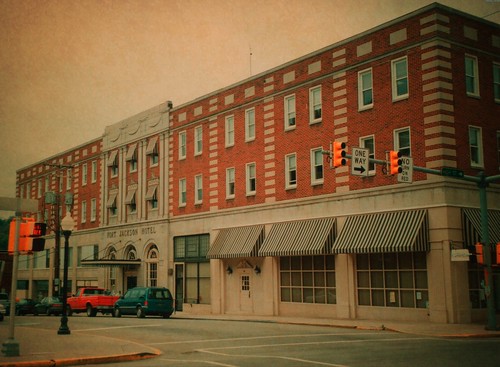
The Fort Jackson Hotel Developing was initially built in 1926, resulting from the tragic Downey Property fire in Dec, 1925 replacing the destroyed 3-story brick Downey Property, directly across from the courthouse. The building was developed by the Pittsburgh architectural firm of Bartholomew &amp Smith. Building contract was awarded to Baker &amp Coombs of Morgantown, WV. With steel beams arriving in the summer season and building continuing throught the fall and winter, and int eh the spring of 1927. It quickly became an impressive and attractive addition to downtown Waynesburg. Constructed of red brick and trimmed with Indiana limestone. The hotel lobby was constraucted in the Italian Renaissance style with a higher-beamed ceiling. On the mezzanien floor was a main dining room seating a hundred. As effectively there was a private dining roon that seated 40. The seventy-space hotel had thirty-5 rooms on each of the second and third floors, served by two elevators. The 60-x 180-foot structure housed seven neighborhood businesses on its ground floor (three on Higher Street and 4 on Washington Street). The initial organizations integrated the Ullom &amp Baily Drugstore, the Fort Jackson barber Shop and the H.C. Schreiber Jewelry Retailer. (Source: The History of Greene County by G. Wayne Smith, Part VI, pg. 865-866)

Soon after a number of years, the developing was acquired by the county and converted into workplace space housing many county workers inside the Division of Human Services

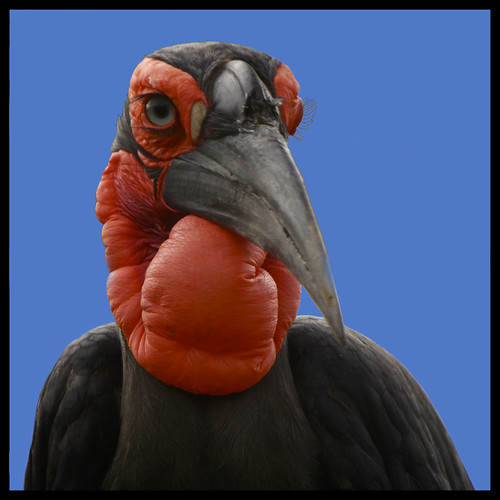
BUCORVUS

Image by fabiogis50 disgusted but back!!!
Bucorvus cafer

www.parcogallorose.it/index.htm
.
.
.
PhotoAwardsCounter
Click right here to see the awards count for this photo. (?)

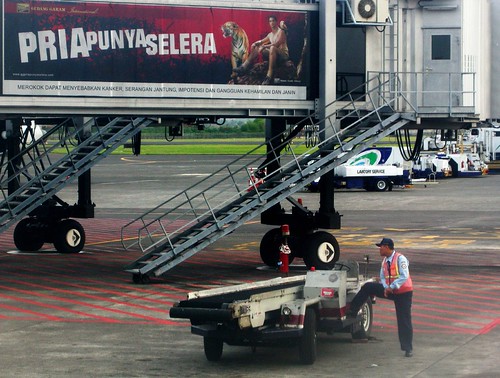
pria punya selera

Image by nadi0
Denpasar Airport, Bali.

Gun Test: LWRCI IC-DI And Razorback Rifles

Gun Test: LWRCI IC-DI And Razorback Rifles
Other firms owned and run by Bernstein and his son Kevin contain MATECH and Xerion, which manufacture every little thing from fins for U.S. military mortar rounds to “military higher-frequency filter dependent assemblies”—think military microwave technology …
Study a lot more on Daily Caller

SmartCAM V2016 Released
The SmartCAM CAM portfolio includes applications for CNC (personal computer numerically controlled) milling, turning, fabrication and wire EDM (electrical discharge machining). Moreover the business gives SmartCAM add-ons for CNC machine code editing and&nbsp…
Read far more on Desktop Engineering

Brookstone Cat Ear Headphones Overview: Cute, But Not Cute
The Axent Wear cat ear headphones from manufacturer Brookstone could not have identified a a lot more sympathetic customer in me. I&#39m their target audience: I watch an absurd quantity of anime, I like cute factors and flashy lights, I have a robust collection of …
Read more on iDigitalTimes.com

Cool Surface Grinding Manufacturer pictures

Check out these surface grinding manufacturer pictures:

Steven F. Udvar-Hazy Center: Vought F4U-1D Corsair
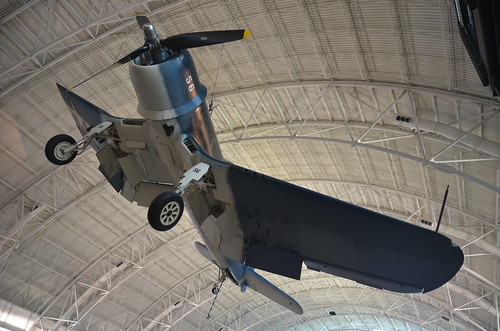
Image by Chris Devers
See more images of this, and the Wikipedia post.

Specifics, quoting from Smithsonian National Air and Space Museum | Vought F4U-1D Corsair:

By V-J Day, September two, 1945, Corsair pilots had amassed an 11:1 kill ratio against enemy aircraft. The aircraft’s distinctive inverted gull-wing design permitted ground clearance for the huge, three-bladed Hamilton Regular Hydromatic propeller, which spanned much more than four meters (13 feet). The Pratt and Whitney R-2800 radial engine and Hydromatic propeller was the largest and one particular of the most strong engine-propeller combinations ever flown on a fighter aircraft.

Charles Lindbergh flew bombing missions in a Corsair with Marine Air Group 31 against Japanese strongholds in the Pacific in 1944. This airplane is painted in the colors and markings of the Corsair Sun Setter, a Marine close-assistance fighter assigned to the USS Essex in July 1944.

Transferred from the United States Navy.

Manufacturer:
Vought Aircraft Business

Date:
1940

Country of Origin:
United States of America

Dimensions:
Overall: 460 x 1020cm, 4037kg, 1250cm (15ft 1 1/8in. x 33ft 5 9/16in., 8900lb., 41ft 1/8in.)

Supplies:
All metal with fabric-covered wings behind the main spar.

Physical Description:
R-2800 radial air-cooled engine with 1,850 horsepower, turned a three-blade Hamilton Normal Hydromatic propeller with solid aluminum blades spanning 13 feet 1 inch wing bent gull-shaped on both sides of the fuselage.

Long Description:
On February 1, 1938, the United States Navy Bureau of Aeronautics requested proposals from American aircraft manufacturers for a new carrier-primarily based fighter airplane. During April, the Vought Aircraft Corporation responded with two styles and one of them, powered by a Pratt &amp Whitney R-2800 engine, won the competition in June. Significantly less than a year later, Vought test pilot Lyman A. Bullard, Jr., 1st flew the Vought XF4U-1 prototype on Could 29, 1940. At that time, the largest engine driving the greatest propeller ever flown on a fighter aircraft propelled Bullard on this test flight. The R-2800 radial air-cooled engine developed 1,850 horsepower and it turned a 3-blade Hamilton Normal Hydromatic propeller with strong aluminum blades spanning 13 feet 1 inch.

The airplane Bullard flew also had one more striking function, a wing bent gull-shaped on both sides of the fuselage. This arrangement gave further ground clearance for the propeller and lowered drag at the wing-to-fuselage joint. Ironically for a 644-kph (400 mph) airplane, Vought covered the wing with fabric behind the main spar, a practice the organization also followed on the OS2U Kingfisher (see NASM collection).

When naval air strategists had crafted the specifications for the new fighter, the want for speed had overridden all other overall performance goals. With this in thoughts, the Bureau of Aeronautics selected the most strong air-cooled engine offered, the R-2800. Vought assembled a team, lead by chief designer Rex Biesel, to design the very best airframe about this powerful engine. The group included project engineer Frank Albright, aerodynamics engineer Paul Baker, and propulsion engineer James Shoemaker. Biesel and his group succeeded in building a really fast fighter but when they redesigned the prototype for production, they were forced to make an unfortunate compromise.

The Navy requested heavier armament for production Corsairs and Biesel redesigned every outboard folding wing panel to carry three .50 caliber machine guns. These guns displaced fuel tanks installed in each and every wing top edge. To replace this lost capacity, an 897-liter (237 gal) fuselage tank was installed in between the cockpit and the engine. To maintain the speedy and narrow fuselage profile, Biesel could not stack the cockpit on top of the tank, so he moved it almost 3 feet aft. Now the wing fully blocked the pilot’s line of sight throughout the most critical stages of landing. The early Corsair also had a vicious stall, potent torque and propeller effects at slow speed, a quick tail wheel strut, primary gear struts that frequently bounced the airplane at touchdown, and cowl flap actuators that leaked oil onto the windshield. These issues, combined with the lack of cockpit visibility, made the airplane almost not possible to land on the tiny deck of an aircraft carrier. Navy pilots quickly nicknamed the F4U the ‘ensign eliminator’ for its tendency to kill these inexperienced aviators. The Navy refused to clear the F4U for carrier operations until late in 1944, far more than seven years soon after the project started.

This flaw did not deter the Navy from accepting Corsairs because Navy and Marine pilots sorely necessary an improved fighter to replace the Grumman F4F Wildcat (see NASM collection). By New Year’s Eve, 1942, the service owned 178 F4U-1 airplanes. Early in 1943, the Navy decided to divert all Corsairs to land-based United States Marine Corps squadrons and fill Navy carrier-primarily based units with the Grumman F6F Hellcat (see NASM collection). At its ideal speed of 612 kph (380 mph) at six,992 m (23,000 ft), the Hellcat was about 24 kph (15 mph) slower than the Corsair but it was a joy to fly aboard the carrier. The F6F filled in splendidly until improvements to the F4U qualified it for carrier operations. Meanwhile, the Marines on Guadalcanal took their Corsairs into combat and engaged the enemy for the very first time on February 14, 1943, six months just before Hellcat pilots on that battle-scared island initial encountered enemy aircraft.

The F4U had an instant impact on the Pacific air war. Pilots could use the Corsair’s speed and firepower to engage the more maneuverable Japanese airplanes only when the advantage favored the Americans. Unprotected by armor or self-sealing fuel tanks, no Japanese fighter or bomber could withstand for far more than a few seconds the concentrated volley from the six .50 caliber machine guns carried by a Corsair. Key Gregory &quotPappy&quot Boyington assumed command of Marine Corsair squadron VMF-214, nicknamed the ‘Black Sheep’ squadron, on September 7, 1943. Throughout much less than five months of action, Boyington received credit for downing 28 enemy aircraft. Enemy aircraft shot him down on January three, 1944, but he survived the war in a Japanese prison camp.

In Could and June 1944, Charles A. Lindbergh flew Corsair missions with Marine pilots at Green Island and Emirau. On September three, 1944, Lindbergh demonstrated the F4U’s bomb hauling capacity by flying a Corsair from Marine Air Group 31 carrying three bombs each weighing 450 kg (1,000 lb). He dropped this load on enemy positions at Wotje Atoll. On the September eight, Lindbergh dropped the 1st 900-kg (2,000 lb) bomb throughout an attack on the atoll. For the finale 5 days later, the Atlantic flyer delivered a 900-kg (2,000 lb) bomb and two 450-kg (1,000 lb) bombs. Lindbergh went ahead and flew these missions following the commander of MAG-31 informed him that if he was forced down and captured, the Japanese would almost undoubtedly execute him.

As of V-J Day, September two, 1945, the Navy credited Corsair pilots with destroying two,140 enemy aircraft in aerial combat. The Navy and Marines lost 189 F4Us in combat and 1,435 Corsairs in non-combat accidents. Beginning on February 13, 1942, Marine and Navy pilots flew 64,051 operational sorties, 54,470 from runways and 9,581 from carrier decks. Throughout the war, the British Royal Navy accepted two,012 Corsairs and the Royal New Zealand Air Force accepted 364. The demand was so great that the Goodyear Aircraft Corporation and the Brewster Aeronautical Corporation also created the F4U.

Corsairs returned to Navy carrier decks and Marine airfields during the Korean War. On September 10, 1952, Captain Jesse Folmar of Marine Fighter Squadron VMF-312 destroyed a MiG-15 in aerial combat over the west coast of Korea. However, F4U pilots did not have several air-to-air encounters over Korea. Their major mission was to help Allied ground units along the battlefront.

Following the Globe War II, civilian pilots adapted the speedy bent-wing bird from Vought to fly in competitive air races. They preferred modified versions of the F2G-1 and -two originally constructed by Goodyear. Corsairs won the prestigious Thompson Trophy twice. In 1952, Vought manufactured 94 F4U-7s for the French Navy, and these aircraft saw action over Indochina but this order marked the finish of Corsair production. In production longer than any other U.S. fighter to see service in Globe War II, Vought, Goodyear, and Brewster constructed a total of 12,582 F4Us.

The United States Navy donated an F4U-1D to the National Air and Space Museum in September 1960. Vought delivered this Corsair, Bureau of Aeronautics serial number 50375, to the Navy on April 26, 1944. By October, pilots of VF-10 have been flying it but in November, the airplane was transferred to VF-89 at Naval Air Station Atlantic City. It remained there as the squadron moved to NAS Oceana and NAS Norfolk. Throughout February 1945, the Navy withdrew the airplane from active service and transferred it to a pool of surplus aircraft stored at Quantico, Virginia. In 1980, NASM craftsmen restored the F4U-1D in the colors and markings of a Corsair named &quotSun Setter,&quot a fighter assigned to Marine Fighter Squadron VMF-114 when that unit served aboard the &quotUSS Essex&quot in July 1944.

• • •

Quoting from Wikipedia | Vought F4U Corsair:

The Likelihood Vought F4U Corsair was a carrier-capable fighter aircraft that saw service mainly in World War II and the Korean War. Demand for the aircraft soon overwhelmed Vought’s manufacturing capability, resulting in production by Goodyear and Brewster: Goodyear-constructed Corsairs were designated FG and Brewster-built aircraft F3A. From the first prototype delivery to the U.S. Navy in 1940, to final delivery in 1953 to the French, 12,571 F4U Corsairs have been manufactured by Vought, in 16 separate models, in the longest production run of any piston-engined fighter in U.S. history (1942–1953).

The Corsair served in the U.S. Navy, U.S. Marines, Fleet Air Arm and the Royal New Zealand Air Force, as properly as the French Navy Aeronavale and other, smaller, air forces until the 1960s. It speedily became the most capable carrier-primarily based fighter-bomber of World War II. Some Japanese pilots regarded it as the most formidable American fighter of Globe War II, and the U.S. Navy counted an 11:1 kill ratio with the F4U Corsair.

F4U-1D (Corsair Mk IV): Built in parallel with the F4U-1C, but was introduced in April 1944. It had the new -8W water-injection engine. This alter gave the aircraft up to 250&nbsphp (190&nbspkW) much more energy, which, in turn, improved functionality. Speed, for instance, was boosted from 417 miles per hour (671&nbspkm/h) to 425 miles per hour (684&nbspkm/h). Since of the U.S. Navy’s require for fighter-bombers, it had a payload of rockets double the -1A’s, as nicely as twin-rack plumbing for an further belly drop tank. Such modifications necessitated the need for rocket tabs (attached to fully metal-plated underwing surfaces) and bomb pylons to be bolted on the fighter, however, causing extra drag. Additionally, the role of fighter-bombing was a new activity for the Corsair and the wing fuel cells proved as well vulnerable and had been removed.[] The extra fuel carried by the two drop tanks would nevertheless allow the aircraft to fly relatively extended missions in spite of the heavy, un-aerodynamic load. The normal armament of six machine guns had been implemented as effectively. The canopies of most -1Ds had their struts removed along with their metal caps, which were utilised&nbsp— at a single point&nbsp— as a measure to avoid the canopies’ glass from cracking as they moved along the fuselage spines of the fighters.[] Also, the clear-view style &quotMalcolm Hood&quot canopy utilized initially on Supermarine Spitfire and P-51C Mustang aircraft was adopted as regular gear for the -1D model, and all later F4U production aircraft. Further production was carried out by Goodyear (FG-1D) and Brewster (F3A-1D). In Fleet Air Arm service, the latter was known as the Corsair III, and each had their wingtips clipped by 8&quot per wing to let storage in the lower hangars of British carriers.
Cool Edm Milling images

Some cool edm milling pictures:

Image from page 569 of “American engineer” (1912)

Image by Web Archive Book Images
Identifier: americanengineer87newy
Title: American engineer
Year: 1912 (1910s)
Authors:
Subjects: Railroad engineering Engineering Railroads Railroad automobiles
Publisher: New York, N.Y. : Simmons-Boardman Pub. Co
Contributing Library: Carnegie Library of Pittsburgh
Digitizing Sponsor: Lyrasis Members and Sloan Foundation

View Book Web page: Book Viewer
About This Book: Catalog Entry
View All Images: All Photos From Book

Click right here to view book on the internet to see this illustration in context in a browseable online version of this book.

Text Appearing Before Image:
rnished by the Whiting Foundry Equip-ment Firm, Harvey, 111. For the melting division (greyiron and steel) this involves a normal No. 5 Whiting cupolaof from seven to nine tons capacity per hour, and a cinder milla No. three cupola is used for melting stock for the converter. In the steel foundry there is utilized a Whiting side-blow con-verter of two tons capacity, with the tipping mechanism operatedliy a motor it is fitted with a Roots high stress positiveblower. There is also an oven 10 ft. x 13 ft. 6 in. for annealingsteel castings, and a rotary sand grinder. The coremaking division is offered with a automobile oven 7 ft.X 17 ft. a drying oven for cylinder molds, 12 ft. x 17 ft., anda battery of drawer sort ovens in 3 sections. An electricjib crane of four tons capacity is employed for handling the cores.The core and annealing ovens are oil fired. The cleaning de-parment consists of three exhaust tumblers 36 in. x 60 iii. The brass foundry included a tilting brass furnace of 400 lbs.

Text Appearing Right after Image:
Side Blov Stee Co Arr.ingenient ct CuDol.is in the Delaware &amp Hudson Foundry, capacity, but this was identified to be insufficient for the needs andit was moved to the erecting shop, where it is used for castingluib liners, a bigger a single becoming installed in its place. There arealso installed a magnetic separator, a 24 in. x 30 in. wet tum-lilsr, a metal band saw and the necessary benches and grinder.In the basic equipment of the plant there is a full system.if industrial tracks and turntables, as nicely as charging vehicles forpig iron and coke. The foundry is under the direct supervision of J. H. Manning,superintendent of motive energy, and G. S. Edm.onds, superintend-ent of shops, Delaware &amp Hudson Company. V. Z. Caracristiwas consulting engineer in charge of the building. FREIGHT Vehicle TROUBLES* BY J. (Builder. Dela FRITTS. The query has l)ecn asked as to why we arc experiencingso much trouhle with freight carrying ecjuipment. In answeringthis question we should take into consid

Note About Photos
Please note that these pictures are extracted from scanned page images that may possibly have been digitally enhanced for readability – coloration and look of these illustrations might not perfectly resemble the original operate.

Image from web page 66 of “Annals of the South African Museum. Annale van die Suid-Afrikaanse Museum” (1898)

Image by Internet Archive Book Photos
Identifier: annalsofsouthafr100sout
Title: Annals of the South African Museum. Annale van die Suid-Afrikaanse Museum
Year: 1898 (1890s)
Authors: South African Museum
Subjects:
Publisher: Cape Town [etc.] The Museu
Contributing Library: Harvard University, Museum of Comparative Zoology, Ernst Mayr Library
Digitizing Sponsor: Harvard University, Museum of Comparative Zoology, Ernst Mayr Library

View Book Page: Book Viewer
About This Book: Catalog Entry
View All Photos: All Images From Book

Click here to view book on the internet to see this illustration in context in a browseable on the internet version of this book.

Text Appearing Before Image:
three): 100-140. Fischer, P. H., Duval, M. &amp Raffy, A. 1933. Etudes sur les echanges respiratoires des littorines. Archives de zoologie experimentale et produce 74 (33): 627-634.Kohn, A. J. 1960a. Ecological notes on Conus (Mollusca: Gastropoda) in the Trincomalee area of Ceylon. Annals and Magazine of Natural History (13) 2 (17): 309-320.Kohn, A. J. 19606. Spawning behaviour, egg masses and larval development in Conus from the Indian Ocean. Bulletin of the Bingham Oceanographic Collection, Yale University 17 (4): 1-51.Thiele, J. 1910. Mollusca. B. Polyplacophora, Gastropoda marina, Bivalvia. In: Schultze, L. Zoologische und anthro- pologische Ergebnisse einer Forschungsreise im westlichen und zentralen Siid-Afrika ausgefuhrt in den Jahren 1903-1905 4 (15). Denkschriften der medizinisch-naturwissenschaftlichen Gesellschaft zu Jena 16: 269-270. (continued inside back cover) ANNALS OF THE SOUTH AFRICAN MUSEUMANNALE VAN DIE SUID-AFRIKAANSE MUSEUM Volume 100 BandMay 1992 MeiPart two Deel

Text Appearing After Image:
THE BASKETWORK OF SOUTHERN AFRICA Element I Technology ByE. M. SHAW Cape Town Kaapstad The ANNALS OF THE SOUTH AFRICAN MUSEUM are issued in parts at irregular intervals as materialbecomes obtainable Obtainable from the South African Museum, P.O. Box 61, Cape Town 8000 Die ANNALE VAN DIE SUID-AFRIKAANSE MUSEUM word uitgegee in dele op ongereelde tye na gelang van diebeskikbaarheid van stof Verkrygbaar van die Suid-Afrikaanse Museum, Posbus 61, Kaapstad 8000 OUT OF PRINT/UIT DRUK 1, 2(1-three, 5-eight), three(1-two, four-five, 8, t.-p.i.), five(1-three, five, 7-9), six(1, t.-p.i.), 7(1-four), eight, 9(1-2, 7), ten(1-3), 11(1-two, 5, 7, t.-p.i.), 14(1-2), 15(four-five), 24(two, five), 27, 31(1-3), 32(5), 33, 36(two), 43(1), 45(1), 67(5), 84(two) Copyright enquiries to the South African MuseumKopieregnavrae aan die Suid-Afrikaanse Museum ISBN 86813 125 3 Printed in South Africa byThe Rustica Press, Pty., Ltd.,Old Mill Road, Ndabeni, Cape In Suid-Afrika gedruk deurDie Rustica-pers, Edms., Bpk.,Old Mill-weg, Ndabeni, Kaap D839 THE BASKETWORK OF SOU

Note About Photos
Please note that these images are extracted from scanned page images that may possibly have been digitally enhanced for readability – coloration and look of these illustrations might not completely resemble the original function.

Image from web page 57 of “Le quincaillier (Juillet-Decembre 1907)” (1907)

Image by Internet Archive Book Photos
Identifier: lequincaijuidec1907mont
Title: Le quincaillier (Juillet-Decembre 1907)
Year: 1907 (1900s)
Authors:
Subjects: Commerce
Publisher: Montréal :
Contributing Library: Fisher – University of Toronto
Digitizing Sponsor: University of Toronto

View Book Web page: Book Viewer
About This Book: Catalog Entry
View All Images: All Images From Book

Click here to view book online to see this illustration in context in a browseable on the web version of this book.

Text Appearing Ahead of Image:
. Danduiand Brodeur &ampBoyer a Jas. Edm. Bancroft (134,- Saint-Pierre aux LiensAve Rolland. Lois 120-129 a 146 ter- 76 chacun vacant. Win. Tren-holme a John Lewis Treniholme ,980i !34706.) Rolland. Lots 1: -Ml. L05 a 108, a 121, 124 18 terrains, 30 x 76, supr. 2280 chacun vacant. Win. Treniholme a iron it Ludger Gauron ,- 134785) Maplewood wood. Lois 28-39, 4. 28-34- autres lol s 80 terrain, 25 x ins Lea Enfants AI incurs de i Jodoin a HenTi Jodoin: ,950 et 672 70 I 134856.) Cote des NeigesChemin C6te des Neiges. Lots 162-7 et 7 8 925 dun cole el .m l.r. ipr. 545(H) 1 do, 55.3 964.six dun 1006.four de lautrc. supr. 54,- vacant. Ektgenie Claude. I i L luc -I aJ a Tin Wcsl- u.iami Land Co. ,221.48 I 134698.) Sault aux-Recol!etsAve Peloquin. Lots 228-260, 261 two ter-• 105 chacun vacant. RosarioNap. Gharbonneau !■■ 1 N I icau a Henri 150 i 134714.) I a 117. 87. i i::i. Iicaid. Ills a• h ,- . I Mill. I i a IvlieSaint Laurent ■ ! , I • una

Text Appearing Following Image:
Common SENSE TUE COQUERELLES ET PUNAISES,RA1S ET SOURIS. Se trouve dans tous les magasins et381 rue Queen, Quest, TORONTO, Ont. Les man-hands trouvent que Widespread Sense ert unarticle qui se vend tres bien, pour cette raison quildonne nne satisfaction create et que chaque elienten parle. De.manhez i.es Prtx

Note About Pictures
Please note that these pictures are extracted from scanned web page images that may possibly have been digitally enhanced for readability – coloration and look of these illustrations may possibly not completely resemble the original function.

BYU controls pace in 1st half, avenges loss to Pepperdine, 88-77

BYU controls pace in 1st half, avenges loss to Pepperdine, 88-77
Last weekend in Malibu, BYU scored a grand total of 65 points in a grinding loss to Pepperdine. Saturday just before a sellout crowd of 18,987 … Following spotting Pepperdine a 6- lead, the Cougar offense kicked into gear. Collinsworth scored BYU&#39s first six …
Read far more on Deseret News

OCD and YOU: Crafting in Laptop RPGs
Play any sort of personal computer roleplaying game (RPG) for any length, and you will find out that it allows you to make stuff. Generally weapons and armor if practically nothing else, but in more and far more games you can build clothes, enchanted products, gimcracks …
Read more on PJ Media

The raiders return to Mercia: From shoes to a child&#39s skate, exhibits show
Hand-operated rotary querns of volcanic lava, sandstone or limestone were utilized for grinding cereals into flour. … An iron hook with a spiral shank and looped head was almost certainly portion of suspension gear and could have had a chain attached. Iron fish hooks&nbsp…
Study much more on Culture24