A few nice milling China parts images I found:
milling
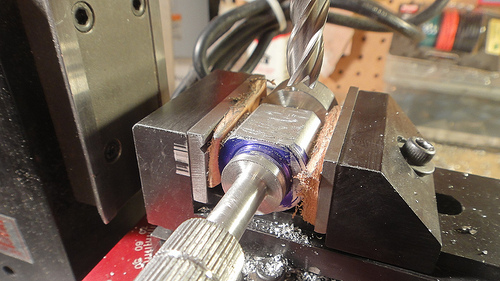
Image by kimncris
milling
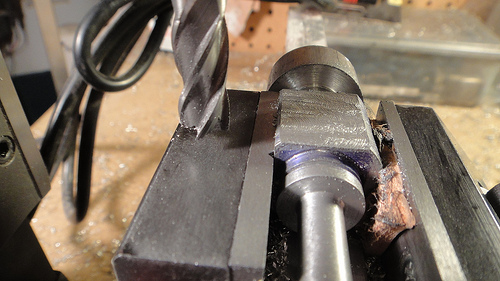
Image by kimncris
milling
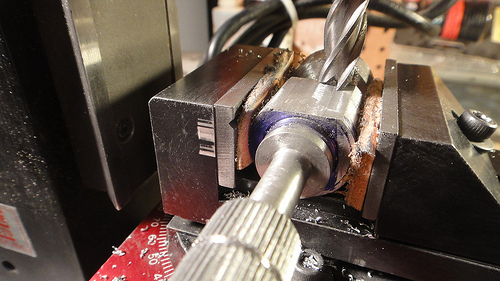
Image by kimncris
Aluminium Machining China
A few nice milling China parts images I found:
milling
Image by kimncris
milling
Image by kimncris
milling
Image by kimncris
Huaqiangbei, or HBQ, is renowned for its electronics markets, serving Shenzhen’s prototyping, manufacturing and deployment ecosystem. The area is reported as…

Check out these machining China large parts images:
Surreal Machine
Image by tk-link
Here you see one of those surreal machines, creating sky from water.
This image was merged from a photo of mine and a great HDR sky capture from mescon – thanks for your CC licence!
The machine is part of the Tinguely Fountain in Basel, Switzerland which was built from metal junk.
Machine part captured with a Canon G9. Worked the photo with GIMP.
A girl riveting machine operator at the Douglas Aircraft Company plant joins sections of wing ribs to reinforce the inner wing assemblies of B-17F heavy bombers, Long Beach, Calif. Better known as the “Flying Fortress,” the B-17F bomber is a later model o
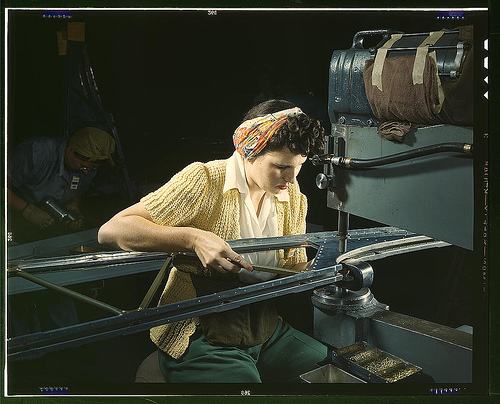
Image by The Library of Congress
Palmer, Alfred T.,, photographer.
A girl riveting machine operator at the Douglas Aircraft Company plant joins sections of wing ribs to reinforce the inner wing assemblies of B-17F heavy bombers, Long Beach, Calif. Better known as the "Flying Fortress," the B-17F bomber is a later model of the B-17, which distinguished itself in action in the south Pacific, over Germany and elsewhere. It is a long range, high altitude, heavy bomber, with a crew of seven to nine men — and with armament sufficient to defend itself on daylight missions
1942 Oct.
1 transparency : color.
Notes:
Title from FSA or OWI agency caption.
Transfer from U.S. Office of War Information, 1944.
Subjects:
Airplane industry
Women–Employment
World War, 1939-1945
Assembly-line methods
Drilling
United States–California–Long Beach
Format: Transparencies–Color
Rights Info: No known restrictions on publication.
Repository: Library of Congress, Prints and Photographs Division, Washington, D.C. 20540 USA, hdl.loc.gov/loc.pnp/pp.print
Part Of: Farm Security Administration – Office of War Information Collection 12002-39 (DLC) 93845501
General information about the FSA/OWI Color Photographs is available at hdl.loc.gov/loc.pnp/pp.fsac
Higher resolution image is available (Persistent URL): hdl.loc.gov/loc.pnp/fsac.1a35336
Call Number: LC-USW36-102
Two assembly line workers at the Long Beach, Calif., plant of Douglas Aircraft Company enjoy a well-earned lunch period, Long Beach, Calif. Nacelle parts of a heavy bomber form the background (LOC)

Image by The Library of Congress
Palmer, Alfred T.,, photographer.
Two assembly line workers at the Long Beach, Calif., plant of Douglas Aircraft Company enjoy a well-earned lunch period, Long Beach, Calif. Nacelle parts of a heavy bomber form the background
1942 Oct.
1 transparency : color.
Notes:
Title from FSA or OWI agency caption.
Transfer from U.S. Office of War Information, 1944.
Subjects:
Douglas Aircraft Company
Airplane industry
Women–Employment
World War, 1939-1945
United States–California–Long Beach
Format: Transparencies–Color
Rights Info: No known restrictions on publication.
Repository: Library of Congress, Prints and Photographs Division, Washington, D.C. 20540 USA, hdl.loc.gov/loc.pnp/pp.print
Part Of: Farm Security Administration – Office of War Information Collection 12002-39 (DLC) 93845501
General information about the FSA/OWI Color Photographs is available at hdl.loc.gov/loc.pnp/pp.fsac
Higher resolution image is available (Persistent URL): hdl.loc.gov/loc.pnp/fsac.1a35342
Call Number: LC-USW36-111
stamping parts china eBay auctions you should keep an eye on:
[wprebay kw=”stamping+parts+china” num=”0″ ebcat=”-1″]
[wprebay kw=”stamping+parts+china” num=”1″ ebcat=”-1″]
[wprebay kw=”stamping+parts+china” num=”2″ ebcat=”-1″]
[wprebay kw=”stamping+parts+china” num=”3″ ebcat=”-1″]
precision metal parts eBay auctions you should keep an eye on:
[wprebay kw=”precision+metal+parts” num=”0″ ebcat=”-1″]
[wprebay kw=”precision+metal+parts” num=”1″ ebcat=”-1″]
[wprebay kw=”precision+metal+parts” num=”2″ ebcat=”-1″]
EuroMold BRASIL 2014 – highlights
"We're one of the three largest mold manufacturers in China. We produce plastic parts in SMC and …. ACTech debuts at EuroMold BRASIL to present its expertise in manufacturing casting prototypes, with short delivery time. The company specializes in …
Read more on Foundry-Planet.com
In the Details: Making a Smart Ring That Women Would Actually Want to Wear
For manufacturing, Mercando and Munro reached out to the Irish company PCH to manufacture from its facilities in Shenzhen, China. "We chose PCH because they have an impressive client list and work with both large and small companies, such as Apple, …
Read more on Core77.com (blog)
The drop-in centres allowing new US tech firms to grow
You know a US small business has made a big impression when President Barack Obama visits to praise it in front of the TV cameras. The company in question is called TechShop, and it runs a growing network of open access manufacturing workshops.
Read more on BBC News
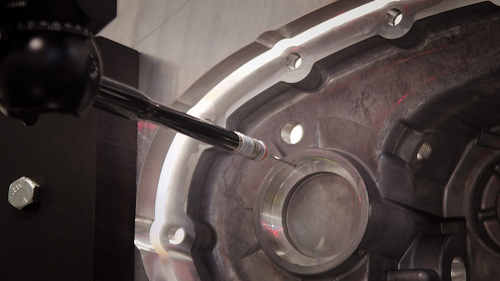
Check out these machining China precision images:
201107120-RD-LSC-0223
Image by USDAgov
A robotic laser aligned device provides precision measurements across multiple surfaces of a cast and machined product made at Port City Group’s Port City Castings Corporation who manufactures high-pressure aluminum die-castings, mostly for the automotive industry, in Muskegon, MI, facility on Wednesday July 20, 2011. Port City Group boosted its employment by 12 percent over last year thanks to two Rural Business Guaranteed Loans totaling .6 million. In its 80,000 sq. ft. facility, machines that range from 800 – 1,600 tons, and cast A380 aluminum alloy products from melted ingots of aluminum, into automotive components of U.S.A. made vehicles. The process features a variety of robotic presses; computer controlled machining China; quality control facility; and complete measurement and testing laboratory. In 2009 banks were backing out of loans for PCG equipment purchase agreements. The U.S. Department of Agriculture (USDA) loan guarantee helped make the loan possible with its guarantee. PCG obtained the needed robotic and other equipment. This resulted in a stable workforce that has since grown. When asked about their USDA experience, Port City Group Sales Manager Laura LaGuire said, “It was great! They were very helpful. Everything that came up was handled smoothly, the money came in place when it was needed, and it was a very smooth transition.” USDA Photo by Lance Cheung.
old machine
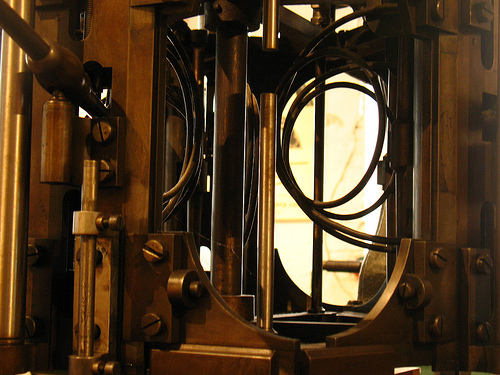
Image by Vilseskogen
American Precision Museum, Windsor, VT, USA.
ultra precision machining China eBay auctions you should keep an eye on:
[wprebay kw=”ultra+precision+machining” num=”0″ ebcat=”-1″]
[wprebay kw=”ultra+precision+machining” num=”1″ ebcat=”-1″]
[wprebay kw=”ultra+precision+machining” num=”2″ ebcat=”-1″]
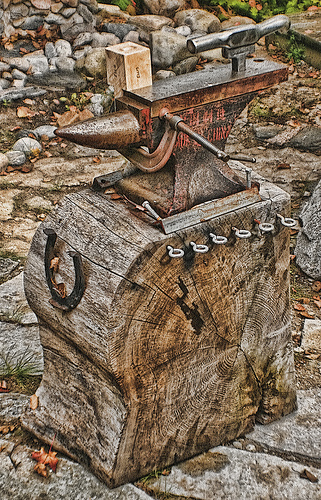
Check out these custom metal parts images:
Anvil / Studio Tour / Haliburton County, Ontario / October, 2008
Image by bill barber
From my set entitled “Twelve Mile Lake”
www.flickr.com/photos/21861018@N00/sets/72157607787077684/
In my collection entitled “Places”
www.flickr.com/photos/21861018@N00/collections/7215760074…
In my photostream
www.flickr.com/photos/21861018@N00/
Reproduced from Wikipedia, the free encyclopedia
en.wikipedia.org/wiki/Anvil
An anvil is a manufacturing tool, made of a hard and massive block of stone or metal used as a support for chiseling and hammering other objects, such as in forging iron and steel items.
Anvils have been used since early Bronze Age times by smiths of all kinds for metal work, although the tool was also used in much earlier epochs for stone and flint work.
There are many references to anvils in ancient Greek and Egyptian writing, including Homer’s works. The anvil was perfected during the Middle Ages when iron working was commonplace.
Anvils have recently lost their former commonness, as mechanized production requires more specialized components for forging. They are still used by blacksmiths producing custom work, and by farriers.
The primary work surface of the anvil is known as the face. It is generally made of hardened steel and should be flat and smooth with rounded edges for most work. Any marks on the face will be transferred to the work. Also, sharp edges tend to cut into the metal being worked and may cause cracks to form in the workpiece. The face is hardened and tempered to resist the blows of the smiths hammer so the anvil face does not deform under repeated use. A hard anvil face also reduces the amount of force lost in each hammer blow. Hammers should never directly strike the anvil face as they may damage it.
The horn of the anvil is a conical projection used to form various round shapes, and is generally unhardened steel or iron. The horn is used mostly in bending operations. It also is used by some smiths as an aid in drawing out stock, "making it longer and thinner".
Some anvils, mainly European, are made with two horns, one square and one round. Also, some anvils are made with side horns or clips for specialized work.
The step or pad, commonly referred to as the table, of the anvil is used for cutting, to prevent damaging the face by conducting such operations there, although most professional smiths shun this practice, as it can damage the anvil.
The hardy hole is a square hole into which specialized forming and cutting tools are placed. It is also used in punching and bending operations.
The pritchel hole is a small round hole that is present on most modern anvils. Some anvils have more than one. It is used mostly for punching. At times smiths will fit a second tool to this hole to allow the smith more flexibility when using more than one anvil tool.
There are many designs for anvils, which are often tailored for a specific purpose or to meet the needs of a particular smith or which originated in diverse geographic locations.
The common blacksmith’s anvil is made of either forged or cast steel, tool steel, or wrought iron (cast iron anvils are generally shunned, as they are too brittle for repeated use, and do not return the energy of a hammer blow like steel). Historically, some anvils have been made with a smooth top working face of hardened steel welded to a cast iron or wrought iron body, though this manufacturing method is no longer in use. It has at one end a projecting conical bick (beak, horn) used for hammering curved work pieces. The other end is typically called the heel. Occasionally the other end is also provided with a bick, partly rectangular in section. Most anvils made since the late 1700s also have a hardy hole and a pritchel hole where various tools, such as the anvil-cutter or hot chisel, can be inserted and held by the anvil. Some anvils have several hardy and pritchel holes, to accommodate a wider variety of hardy tools and pritchels. An anvil may also have a softer pad for chisel work.
An anvil for a power hammer is usually supported on a massive anvil block, sometimes weighing over 800 tons for a 12-ton hammer, and this again rests on a strong foundation of timber and masonry or concrete.
An anvil may have a marking indicating its weight, manufacturer, or place of origin. American made anvils were often marked in pounds. European anvils are sometimes marked in kilograms. English anvils were often marked in hundredweight, the marking consisting of three numbers, indicating hundredweight, quarter hundredweight and pounds. For example, a 3-1-5, if such an anvil existed, would be 3×112 lb + 1×28 lb + 5 lb = 369 lb ~= 168 kg.
Cheap anvils made from inferior steel or cast iron which are unsuitable for serious use are derisively referred to as "ASOs", or "Anvil Shaped Objects". Some amateur smiths have used a piece of railroad track as a makeshift anvil.
Top quality modern anvils are made of cast or forged tool steel and are heat treated for optimum hardness and toughness. Some modern anvils are made mostly from concrete. While the face is steel, the horn is not and can be easily damaged. These anvils can be hard to recognize because the gray paint used is the same shade as the steel face. They tend to weight about half as much as a comparable steel anvil.
A metalworking vise may have a small anvil integrated in its design.
The word "anvil" derives from Anglo-Saxon anfilt or onfilti, either that on which something is "welded" or "folded," cf. German falzen, to fold, or connected with other Teutonic forms of the word, cf. German amboss, in which case the final syllable is from "beat,", and the meaning is "that on which something is beaten" and has likely influenced the English word "emboss
"On the anvil" means any thing in the making, being created, in production etc.
A typical metalworker’s anvil, with horn at one end and flat face at the other, is a standard prop for cartoon gags, as the epitome of a heavy and clumsy object that is perfect for dropping onto the villain. This visual metaphor is common, for example, in Warner Brothers’ Looney Tunes and Merrie Melodies shorts, such as those with Wile E. Coyote and Road Runner.
Anvils are percussion instruments in several famous musical compositions, including:
Giuseppe Verdi: Il Trovatore, featuring the famous Anvil Chorus
Richard Wagner: Der Ring des Nibelungen in Das Rheingold in Scene 3, using 18 anvils, and Siegfried in Act I, notably Siegfried’s Forging Song (Nothung! Nothung! Neidliches Schwert!)
Gustav Holst: Second Suite in F for Military Band, which includes a movement titled "Song of the Blacksmith"
Aaron Copland: Symphony No. 3 (Copland)
Arnold Bax: Symphony No. 3
William Walton: Belshazzar’s Feast (Walton)
Edgard Varèse: Ionisation
Carl Orff: Antigone
Juan María Solare: Veinticinco de agosto, 1983 and Un ángel de hielo y fuego
Pieces by Jean-Baptiste Lully
Howard Shore: The Lord of the Rings film trilogy
Albert Parlow: Anvil Polka and Strauss
Louis Andriessen: De Materie (Part I), which features an extended solo for two anvils
Fear Factory: "Body Hammer" which features the sound of a hammer striking an anvil as percussion.
Judas Priest: "Between The Hammer And The Anvil" which features the sound of a hammer striking an anvil for dramatic effect.
Johann Strauss II: Feuerfest Polka
The Beatles: "Maxwell’s Silver Hammer" makes prominent use of the anvil. Beatles road manager Mal Evans played the anvil.
Kansas: "On the Other Side" featured some use of the anvil. Kansas violinist Robby Steinhardt played the anvil on the track.
Post Processing:
Topaz vibrance (HDR), sandstone texture
World PEACE
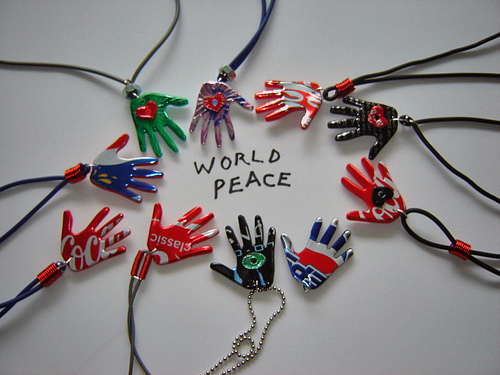
Image by Urban Woodswalker
I make necklaces out of used aluminum beverage cans. I wash them and then cut out the hands to make necklaces. These hands remind me of Mexican Milagros.
According to Wikipedia:
"Milagros (also known as ex-votos or dijes) are religious folk charms that are traditionally used for healing purposes and as votive offerings in Mexico, the southern United States, other areas of Latin America, as well as parts of the Iberian peninsula. They are frequently attached onto altars, shrines, and sacred objects found in places of worship, and they are often purchased in churches, cathedrals or from street vendors.
Milagros come in a variety of shapes and dimensions and are fabricated from many different materials, depending on local customs. For example, they might be nearly flat or fully three dimensional; and they can be constructed from gold, silver, tin, lead, wood, bone, or wax. In Spanish, the word milagro literally means miracle or surprise.
The use of milagros is a folk custom in parts of North, Central, and South America, and it is claimed that the custom is traceable to ancient Iberians who inhabited the coastal regions of Spain. The use of milagros accompanied the Spanish as they arrived in Central and South America. Although the custom is not as prevalent as it once was, the use of milagros or ex-votos continues to be a part of folk culture throughout rural areas of Spain—particularly Andalusia, Catalonia and Majorca.
As part of a religious ritual or an act of devotion, milagros can be offered to a symbol of a saint as a reminder of a petitioner’s particular need, or in gratitude for a prayer answered. They are used to assist in focusing attention towards a specific ailment, based on the type of charm used. Milagro symbolism is not univeral; a milagro of a body part, such as a leg, might be used as part of a prayer or vow for the improvement of a leg; or it might refer to a concept such as travel. Similarly, a heart might represent ideas as diverse as a heart condition, a romance, or any number of other interpretations. Milagros are also carried for protection and good luck.
In addition to religious and ritual applications, milagros are often found as components in necklaces, earrings and other jewelry."
Friendship
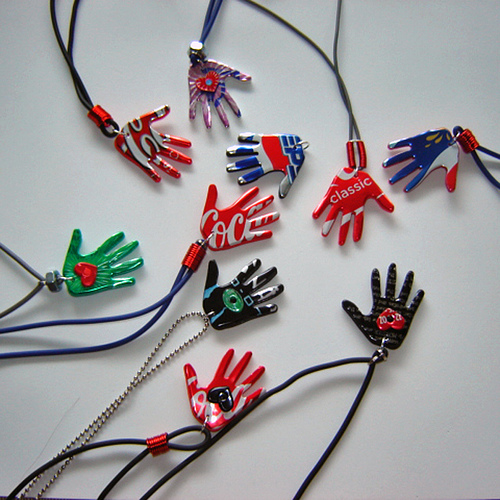
Image by Urban Woodswalker
I make necklaces out of used aluminum beverage cans. I wash them and then cut out the hands to make necklaces. These hands remind me of Mexican Milagros.
According to Wikipedia:
"Milagros (also known as ex-votos or dijes) are religious folk charms that are traditionally used for healing purposes and as votive offerings in Mexico, the southern United States, other areas of Latin America, as well as parts of the Iberian peninsula. They are frequently attached onto altars, shrines, and sacred objects found in places of worship, and they are often purchased in churches, cathedrals or from street vendors.
Milagros come in a variety of shapes and dimensions and are fabricated from many different materials, depending on local customs. For example, they might be nearly flat or fully three dimensional; and they can be constructed from gold, silver, tin, lead, wood, bone, or wax. In Spanish, the word milagro literally means miracle or surprise.
The use of milagros is a folk custom in parts of North, Central, and South America, and it is claimed that the custom is traceable to ancient Iberians who inhabited the coastal regions of Spain. The use of milagros accompanied the Spanish as they arrived in Central and South America. Although the custom is not as prevalent as it once was, the use of milagros or ex-votos continues to be a part of folk culture throughout rural areas of Spain—particularly Andalusia, Catalonia and Majorca.
As part of a religious ritual or an act of devotion, milagros can be offered to a symbol of a saint as a reminder of a petitioner’s particular need, or in gratitude for a prayer answered. They are used to assist in focusing attention towards a specific ailment, based on the type of charm used. Milagro symbolism is not univeral; a milagro of a body part, such as a leg, might be used as part of a prayer or vow for the improvement of a leg; or it might refer to a concept such as travel. Similarly, a heart might represent ideas as diverse as a heart condition, a romance, or any number of other interpretations.
Milagros are also carried for protection and good luck.
In addition to religious and ritual applications, milagros are often found as components in necklaces, earrings and other jewelry."
Most popular cnc china eBay auctions:
[wprebay kw=”cnc+china” num=”0″ ebcat=”-1″]
[wprebay kw=”cnc+china” num=”1″ ebcat=”-1″]
[wprebay kw=”cnc+china” num=”2″ ebcat=”-1″]