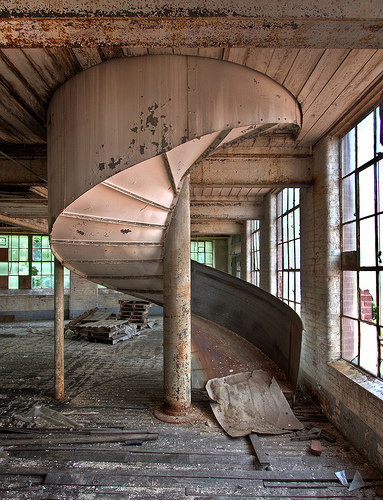
Verify out these internal grinding pictures:
St Paul’s Cathedral
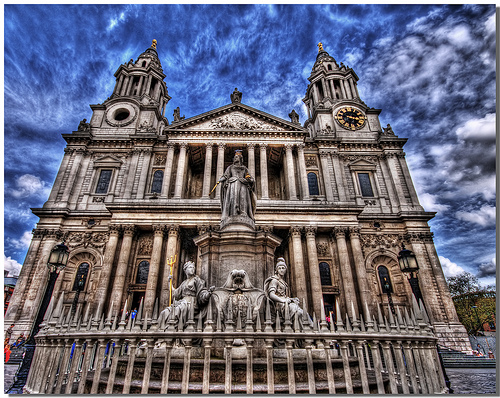
Image by vgm8383
View On Black
An HDR photo of the Excellent West Door at St. Paul’s Cathedral in London, England.
St Paul’s Cathedral is an Anglican cathedral on Ludgate Hill, in the City of London, and the seat of the Bishop of London. The present creating dates from the 17th century, and is typically reckoned to be London’s fifth St Paul’s Cathedral, even though the number is larger if each and every significant mediæval reconstruction is counted as a new cathedral. The cathedral is one of London’s most visited sites. The cathedral sits on the edge of London’s oldest region, the City. The City originated as a Roman trading post along the edge of the River Thames.
The cathedral is constructed of Portland stone in a late Renaissance style that is England’s sober Baroque. Its impressive dome was inspired by St Peter’s Basilica in Rome. It rises 365 feet (108 m) to the cross at its summit, creating it a well-known London landmark. Wren achieved a pleasing look by creating 3 domes: the tall outer dome is non-structural but impressive to view, the lower inner dome gives an artistically balanced interior, and amongst the two is a structural cone that supports the apex structure and the outer dome. Wren was mentioned to have been hauled up to the rafters in a basket in the course of the constructing of its later stages to inspect progress.
The nave has 3 tiny chapels in the two adjoining aisles – All Souls and St Dunstan’s in the north aisle and the Chapel of the Order of St Michael and St George in the south aisle. The principal space of the cathedral is centred below the Dome it rises 108.four metres from the cathedral floor and holds 3 circular galleries – the internal Whispering Gallery, the external Stone Gallery, and the external Golden Gallery.
The Whispering Gallery runs around the interior of the Dome and is 99 feet (30.two m) above the cathedral floor. It is reached by 259 methods from ground level. It gets its name due to the fact a whisper against its wall at any point is audible to a listener with their ear held to the wall at any other point around the gallery. This performs only for whispered speech – typical voiced speech is not focused in this way.
The base of the inner dome is 173 feet (53.four m) above the floor. The top of the inner dome is about 65 m above the floor, producing this the height of the enclosed space. The cathedral is some 574 feet (175 m) in length (including the portico of the Excellent West Door), of which 223 feet (68 m) is the nave and 167 feet (51 m) is the choir. The width of the nave is 121 feet (37 m) and across the transepts is 246 feet (75 m). The cathedral is hence slightly shorter but somewhat wider than Old St Paul’s.
The quire extends to the east of the dome and holds the stalls for the clergy and the choir and the organ. To the north and south of the dome are the transepts of the North Choir and the South Choir.
Particulars of the towers at the west end and their dark voids are boldly scaled, in order to read effectively from the street under and from a distance, for the towers have often stood out in the urban skyline. They are composed of two complementary components, a central cylinder increasing via the tiers in a series of stacked drums, and paired Corinthian columns at the corners, with buttresses above them, which serve to unify the drum shape with the square block plinth containing the clock. The major entablature breaks forward over the paired columns to express both elements, tying them collectively in a single horizontal band. The cap, like a bell-shaped miniature dome, supports a gilded finial, a pinecone supported on four scrolling angled brackets, the topmost expression of the consistent theme. The north-west tower includes 13 bells and the south-west consists of four, such as Wonderful Paul, cast in 1881, and Excellent Tom (the hour bell), recast twice, after being moved from the old Palace of Westminster.
This cathedral has survived in spite of becoming targeted in the course of the Blitz – it was struck by bombs on ten October 1940 and 17 April 1941. On 12 September 1940 a time-delayed bomb that had struck the cathedral was successfully defused and removed by a Bomb Disposal detachment of Royal Engineers under the command of Short-term Lieutenant Robert Davies. Had this bomb detonated, it would have completely destroyed the Cathedral, as it left a one hundred-foot (30 m) crater when it was later remotely detonated in a safe location.[14] As a outcome of this action, Davies was awarded the George Cross, along with Sapper George Cameron Wylie.[15]. On 29 December 1940 the cathedral had an additional close call when an incendiary bomb became lodged in the lead shell of the dome but fell outwards onto the Stone Gallery and was place out prior to it had the likelihood to ignite the dome timbers.
Courtesy of Wikipedia
M3A1 (Stuart) Light Tank. 1941. Легкий танк M3А1 “Стюарт”.
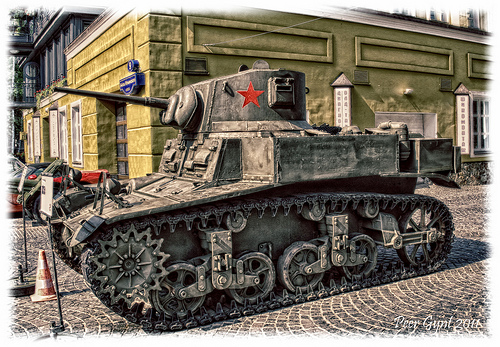
Image by Peer.Gynt
Technical Museum of Vadim Zadorozhny. Moscow.
Музей Техники Вадима Задорожного. Москва.
The M3 Stuart, formally Light Tank M3 was an American light tank of Planet War II. It was utilized by British and Commonwealth forces prior to the entry of the USA into the war, and thereafter by US and Allied forces till the end of the war. The name General Stuart or Stuart offered by the British comes from the American Civil War Basic J.E.B. Stuart and was used for each the M3 and M5 Light Tank in British service it also had the unofficial nickname of Honey. To the United States Army the tanks have been officially recognized only as Light Tank M3 and Light Tank M5.
History
Observing events in Europe, American tank designers realized that the Light Tank M2 was becoming obsolete and set about enhancing it. The upgraded design and style, with thicker armor, modified suspension and new gun recoil system was called "Light Tank M3". Production of the car began in March 1941 and continued till October 1943. Like its direct predecessor, the M2A4, the M3 was armed with a 37 mm M5 gun and 5 .30-06 Browning M1919A4 machine guns: coaxial with the gun, on best of the turret in an M20 AA mount, in a ball mount in proper bow, in the appropriate and left hull sponsons.
To relieve the demand for the radial aero-engines employed in the M3, a new version was developed utilizing twin Cadillac V-8 automobile engines. The new model (initially known as M4 but redesignated M5 to stay away from confusion with the M4 Sherman) also featured a redesigned hull with sloped glacis plate and driver’s hatches moved to the best. Even though the primary criticism from the making use of units was that the Stuarts lacked firepower, the improved M5 series kept the same 37 mm gun. The M5 progressively replaced the M3 in production from 1942 and was in turn succeeded by the Light Tank M24 in 1944.
Combat history
Light Tank M5A1 passes by means of the wrecked streets of Coutances.
An Australian Stuart I during the final assault on Buna.
A British M3 (Stuart I) knocked out during fighting in North Africa.The British Army was the first to use the Light Tank M3 as the "General Stuart" in combat. In November 1941, some 170 Stuarts took element in Operation Crusader, with poor benefits. Even though the higher losses suffered by Stuart-equipped units for the duration of the operation had far more to do with greater tactics and instruction of the Afrika Korps than the apparent superiority of German armor in the North African campaign, the operation revealed that the M3 had many technical faults. Mentioned in the British complaints were the 37 mm M5 gun and poor internal layout. The two-man turret crew was a important weakness, and some British units attempted to fight with three-man turret crews. The Stuart also had a restricted range, which was a extreme difficulty in desert warfare as units usually outpaced their supplies and had been stranded when they ran out of fuel. On the optimistic side, crews liked its high speed and mechanical reliability, hence its unofficial nickname of Honey. The higher speed and higher reliability distinguished the Stuart from cruiser tanks of the period, in distinct the Crusader, which composed a massive portion of the British tank force in Africa up till 1942.
From the summer of 1942, when sufficient US medium tanks had been received, the British typically kept Stuarts out of tank-to-tank combat, employing them mostly for reconnaissance. The turret was removed from some examples to save weight and boost speed and variety. These became recognized as "Stuart Recce". Some other people have been converted to armored personnel carriers and have been recognized as "Stuart Kangaroo", and some were converted command vehicles and identified as "Stuart Command". M3s, M3A3s, and M5s continued in British service until the end of the war, but British armor units had a smaller proportion of these light tanks than US units.
The other main Lend-Lease recipient of the M3, the Soviet Union, was even significantly less happy with the tank, taking into consideration it undergunned, underarmored, probably to catch fire, and as well sensitive to fuel high quality. The narrow tracks have been very unsuited to operation in winter circumstances, as they resulted in high ground pressures that sank the tank into the snow. Also, the M3’s radial aircraft engine necessary high-octane fuel, which complicated Soviet logistics as most of their tanks utilized diesel. Nevertheless, the M3 was superior to early-war Soviet light tanks such as the T-60, which had been frequently underpowered and possessed even lighter armament than the Stuart. In 1943, the Red Army tried out the M5 and decided that the upgraded design and style wasn’t much far better than the M3. Being much less desperate than in 1941, the Soviets turned down an American offer you to provide the M5. M3s continued in Red Army service at least until 1944.
In US Army service, the M3 1st saw combat in the Philippines. Two battalions, comprising the Provisional Tank Group fought in the Bataan peninsula campaign. When the American army joined the North African Campaign in late 1942, Stuart units still formed a huge element of its armor strength. After the disastrous Battle of the Kasserine Pass the US rapidly followed the British in disbanding most of their light tank battalions and subordinating the Stuarts to medium tank battalions performing the classic cavalry missions of scouting and screening. For the rest of the war, most US tank battalions had 3 companies of M4 Shermans and one particular business of M3s or M5/M5A1s.
In the European theater, Allied light tanks had to be given cavalry and infantry fire assistance roles given that their main cannon armament could not compete with heavier enemy AFVs. Nonetheless, the Stuart was still effective in combat in the Pacific Theater, as Japanese tanks had been both relatively uncommon and had been generally a lot weaker than even Allied light tanks. Japanese infantrymen have been poorly equipped with anti-tank weapons and tended to attack tanks utilizing close-assault tactics. In this atmosphere, the Stuart was only moderately much more vulnerable than medium tanks. In addition, the poor terrain and roads common to the theatre have been unsuitable for the much heavier M4 medium tanks, and so initially, only light armor could be deployed. Heavier M4s have been at some point brought to overcome heavily entrenched positions, even though the Stuart continued to serve in a combat capacity until the end of the war.
Even though the Stuart was to be entirely replaced by the newer M24 Chaffee, the quantity of M3s/M5s developed was so great (more than 25,000 including the 75 mm HMC M8) that the tank remained in service until the finish of the war and effectively right after. In addition to the United States, United Kingdom and Soviet Union, who have been the principal customers, it was also employed by France, China (M3A3s and, right away post-war, M5A1s) and Tito’s partisans in Yugoslavia (M3A3s and handful of M3A1).
After the war, some nations chose to equip their armies with inexpensive and dependable Stuarts. The Republic of China Army, getting suffered wonderful attrition in terms of armors as a result of the ensuing civil war, rebuilt their armored forces by acquiring surplus automobiles left behind in the former PTO by the US forces, like 22 M5A1s to equip two tank organizations. They would have their finest hours throughout the Battle of Kuningtou, for which the tank came to be recognized as the "Bear of Kinmen" (金門之熊). The M5 played a substantial function in the First Kashmir War (1947) in between India and Pakistan, including the battle of Zoji-la pass at an outstanding altitude of nearly 12,000 ft. The vehicle remained in service in many South American nations at least till 1996.
Throughout the 60s and 70s, the Portuguese Army also utilized some in the war in Angola, where its all terrain capability (compared to wheeled cars) was greatly appreciated.
Production history
Produced 1941-1943
Specifications
Weight 14.7 tonnes (32,400 lb)
Length 4.5 m (14.8 ft)
Width two.46 m (eight.1 ft)
Height 2.3 m (7.5 ft)
Crew 4 (Commander, gunner, driver, co-driver)
——————————————————————————–
Armor 13 – 51 mm
Major
armament 37 mm M6 in M44 mount
174 rounds
Secondary
armament 3 x .30-06 Browning M1919A4 MG
7,500 rounds
Engine Continental W-670-9A, 7 Cylinder air-cooled radial
250 hp (186 kW)
Energy/weight 17.82 hp/tonne
Suspension Vertical volute spring
Operational
range 120 km (74 mi)
Speed 58 km/h (36 mph) (road)
30 km/h (18 mph) (off-road)
From Wikipedia, the free encyclopedia
en.wikipedia.org/wiki/M3_Stuart
Chantilly VA – Steven F. Udvar-Hazy Center – McDonnell Douglas F-4 Phantom II
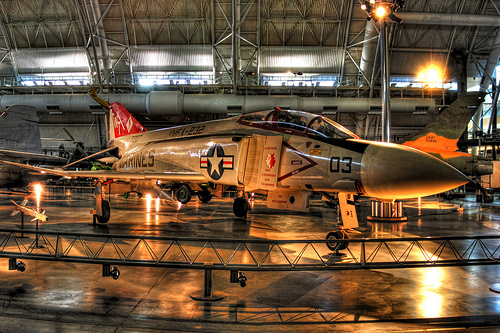
Image by Daniel Mennerich
The McDonnell Douglas F-four Phantom II is a tandem two-seat, twin-engined, all-climate, long-variety supersonic jet interceptor fighter/fighter-bomber initially created for the United States Navy by McDonnell Aircraft. It 1st entered service in 1960 with the U.S. Navy. Proving extremely adaptable, it was also adopted by the U.S. Marine Corps and the U.S. Air Force, and by the mid-1960s had grow to be a significant portion of their respective air wings.
The Phantom is a massive fighter with a prime speed of over Mach 2.two. It can carry more than 8,400 kg of weapons on nine external hardpoints, such as air-to-air and air-to-ground missiles, and a variety of bombs. The F-4, like other interceptors of its time, was developed without an internal cannon, but later models incorporated a M61 Vulcan rotary cannon. Starting in 1959, it set 15 globe records, such as an absolute speed record, and an absolute altitude record.
The F-four was utilised extensively throughout the Vietnam War, serving as the principal air superiority fighter for both the Navy and Air Force, as effectively as being important in the ground-attack and reconnaissance roles by the close of U.S. involvement in the war. The Phantom has the distinction of getting the final U.S. fighter flown to attain ace status in the 20th century. Throughout the Vietnam War, the USAF had one particular pilot and two weapon systems officers (WSOs), and the US Navy one pilot and one particular radar intercept officer (RIO), obtain five aerial kills against other enemy fighter aircraft and turn into aces in air-to-air combat. The F-four continued to type a major part of U.S. military air energy throughout the 1970s and 1980s, being progressively replaced by much more contemporary aircraft such as the F-15 Eagle and F-16 in the U.S. Air Force the Grumman F-14 Tomcat and F/A-18 Hornet in the U.S. Navy and the F/A-18 in the U.S. Marine Corps.