Adjustments’ handle of metal milling machine. Free HD video footage

Adjustments’ handle of metal milling machine. Free HD video footage

Check out these milling machining images:

Adjustments’ handle of metal milling machine. Free HD video footage

Image by Unripe Content
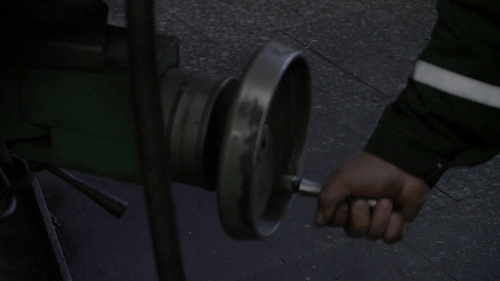
Adjustments’ handle of metal milling machine in a use of a worker. He is rotating it forward and backward doing fine tuning in his task.

DOWNLOAD LINK: unripecontent.wordpress.com/2014/04/25/adjustments-handle…

Dimensions: 1920 x 1080
Video codec: H.264
Audio codec: AAC
Color profile: HD (1-1-1)
Duration: 00:09
FPS: 25
Data rate: 20.45 Mbit/s

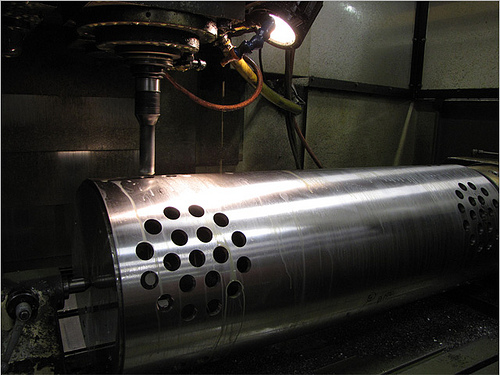
vertical milling machine – cylinder liner machining

Image by cnc-machining
vertical cnc machining on a cylinder liner at www.heartlandmachining.com

Bridgeport China Milling China Machine

Image by Kiet Callies
Be sure to visit our website at calliesadventures.com

Cool China Machined Components Manufacturers images

Cool China Machined Components Manufacturers images

Some cool China machined components manufacturers images:

D-Wave Orion
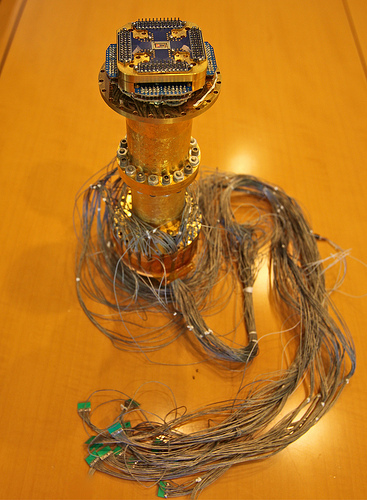
Image by jurvetson
Today’s MIT Tech Review opening seems like a good prompt to tell the story of the D-Wave Orion that adorns our office:

"Inside a blocky building in a Vancouver suburb is a place chilled colder than anywhere in the natural universe. Inside that is a computer processor that Amazon founder Jeff Bezos and the CIA’s investment arm, In-Q-Tel, believe can tap the quirks of quantum mechanics to unleash more computing power than any conventional computer chip.

If the bet works out, some of the world’s thorniest computing problems, such as the hunt for new drugs or efforts to build artificial intelligence, would become dramatically less challenging.

D-Wave’s supercooled processor is designed to handle what software engineers call "optimization" problems, the core of conundrums such as figuring out the most efficient delivery route, or how the atoms in a protein will move around when it meets a drug compound. "Virtually everything has to do with optimization, and it’s the bedrock of machine learning, which underlies virtually all the wealth creation on the Internet," says Geordie Rose, D-Wave’s founder and chief technology officer."

So with that preamble, let me share the story of this artifact (and detailed photos below), with huge thanks to Murray, our historical scribe and Research Engineer at D-Wave:

"The ORION-IO project was a lot of fun and all the more remarkable in the context of the quantum computing processor, fabrication, and software development that were taking place with it. In 2007 it became somewhat emblematic of the complexity and teamwork that were characteristic of the whole quantum computing system.

The technical specifications and contextual history are more rich than can be captured in a short summary, but I’ve tried to provide some design notes that tell elements of the story.

ORION-IO Design Notes:

[Component Elements]

i.Wiring from room temperature to 20mK
ii.The Lumped-Element-Filter (LEF) bank in a plate stack.
iii.The Copper-Powder-Filter (CPF) bank in a honeycomb bar
iv.The Chip Packaging and Pedestal Mount

[Time]

The ORION-IO project kicked-off with defining requirements in May 2006. The first 16 qubit chip was installed and cooled in an ORION-IO assembly on Nov 21st, 6.5 months later. Before the end of 2006 Mike Simmonds, then VP of Quantum Design (a cryogenics equipment manufacturer), visited and reviewed the design. He proposed a 1-year project to do an iteration on the system, not knowing that we had built the original in almost half that time.

[Temperature]

The entire ORION-IO system operates at ~20mK (0.020K) with the quantum processor (save for the top section of wiring.) That’s more than 100X colder than interstellar space — 2.725K for the cosmic microwave background radiation. There are no known processes in the Universe that can achieve temperatures that cold. So unless there is other intelligent life somewhere in space, this assembly was the coldest place in the Universe during it’s working life.

[Space]

The ORION-IO was tightly space constrained. The assembly had a 2mm vacuum gap around the LEF plates and a 5mm vacuum gap off of its end.

[Resistance]

The quantum processors that mounted in the ORION-IO system had all superconducting circuitry. To support quantum computation at 20mK all of the wiring in the ORION-IO assembly had to be superconducting as well. This included printed circuit boards, wire bond pads, solder contacts, connectors, wires, and filters.

[Filtering]

The filters in the ORION-IO are low-pass filters with a 3MHz cut-off frequency. The noise above the signal bandwidth is severely attenuated for a cryogenic environment. The strongest attenuation begins at 6GHz when the noise power is attenuated 1 Billion Billion times (10^-18). There are no resistive losses on the signal path.

[Chip Packaging]

The aluminum plates around the chip serve as a superconducting shield that freeze the remnant magnetic field in place around the processor. However superconducting aluminum is an extremely poor thermal conductor. To reduce the cool-down time from days to hours, the printed circuit board (PCB) is bolted to a copper under-plate with 12 gold-plated copper screws. The PCB itself has gold and tin plating on the surface metal layer as well as superconducting traces on its inner wire layer. At each edge are non-magnetic, superconducting contact pins that must mate with any ORION-IO filtering assembly. One additional concern is that each assembly must manage multiple 300K temperature cycles. This combination of constraints made the chip packaging the most challenging section to design.

[Vacuum Annealing]

Most of the mechanical parts are made out of high-purity Oxygen-free copper. The heaviest copper parts were vacuum annealed to remove Hydrogen that gets captured in the metal during Oxygen removal (Hydrogen goes through a state transition at low-Temperatures that slows cool-down). The annealing creates large domain crystals in the metal that you can see on the surface under the gold plating.

[Dry Mechanical Joints]

There are 12 plate-to-plate joints in the ORION-IO assembly between the fridge and the chip packaging. The gold plating prevents oxidation on the surface of the copper that would reduce thermal conductivity at these interfaces. All of these mechanical joints are dry contacts between mirror-polished plates. These joints were the first of their kind and went against standard practice amongst low-temperature designers. Ultimately the final performance proved the design.

[State of the Art]

Cooling chips to 20mK is one thing. Cooling the electrons in the superconducting circuitry is another thing altogether. To characterize the D-Wave quantum processors the electron temperature had to be measured in the circuitry. Temperatures as low as 17mK were observed. By comparison, a research team at MIT was reporting electron temperatures of 80-90mK in their superconducting quantum circuits (results quoted are circa 2007).

[Mask Generations Tested]

The ORION-IO was one of the longer lasting IO designs at D-Wave. It was used in tests of all of the following mask generations over 5 years:
•Vesuvius
•Shasta
•Rainier
•Quaoar
•Pushkin
•Oberon
•Nacimiento
•Metis
•Leda
•Kalyke
•Iapetus
•Hyperion
•Ganymede
•Phobos II
•Phobos
•Europa II

[Notable Results]

During the course of quantum processor development on ORION-IO systems, some of the more notable results obtained include the following:

16-qubit QC demo in Mountain View, CA and Vancouver; Feb 2007

• 28-qubit Demo at HPC conference; Nov 2007

• Geometrical dependence of the low-frequency noise in superconducting flux qubits; Phys Rev B.; T. Lanting et al.

52-qubit Google Demo, Nov 2009

• A lot of photography that became marketing material, and some of the artwork lining the D-Wave hallways [and DFJ conference rooms]

[Art and Design Concept]

The design of the ORION-IO was largely determined by the tight space constraints — 110 filtered lines plus a quantum chip in roughly the space of a bread pan. The filtering attenuation was very large at frequencies where electromagnetic noise can pass through tiny apertures; so the output of the filters had to be carefully isolated from their input. This is where the dry, mirror-polished joints in the body served double-duty for high thermal conductivity and excellent electrical isolation.

The cylindrical concept was to keep the noisy space outside the cylinder, and the clean signals at the center. With each plate in the stack enclosing a narrow channel for all of the filters in the plate beneath.
There was little freedom for artistic choices although the one notable exception was the colour of the printed circuit boards, each chosen to complement the colour of the metal surfaces around it.

[No Room For Error]

The design for ORION was based on scaling the 23-line ARIES-IO system. The perceived risk of failed lines was substantial, so multiple redundancies were designed into the stages of the system to allow for possible failures (the system was designed as a single module, once constructed). The maximum line yield for an ORION-IO system was 128 lines. The first ORION-IO came online with 126/128 line yield. After final assembly the system passed all operational tests on its first cool down. Over their lifetime the highest yield of the four systems built was 128, the lowest was 122.

Nice China Machine Shop Quote photos

Nice China Machine Shop Quote photos

A few nice machine shop quote images I found:

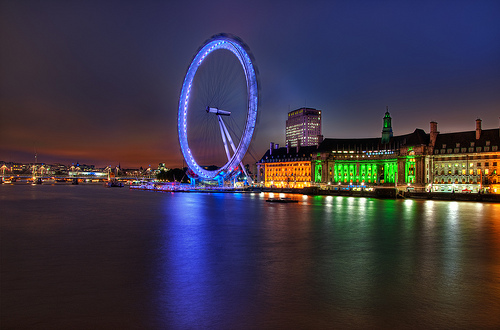
Can You Stop The China Machine – London Eye

Image by Sprengben [why not get a friend]
“To infinity and beyond” – This quote of Toy Story always comes in my mind when I create photos like this. By using exposure times longer than 15 seconds you always get some special effects which you cannot see with you eyes.
Maybe that’s why a lot of my photos use the technique.

Thanks for all the nice words to my Times Square shot. I try to bring out more shots this month. Always connected to the time I find on working with the whole photography thing. If you like spread the word about the shots or reblog it somewhere.

I created a Tumblr account. If you have one add me, you’ll find me under sprengben.tumblr.com/

So far I wish a great next week in your Jobs, Schools, Universities, and also to those who have holidays! 🙂 Cheers to you!

Ben

| Facebook | Fluidr-Interesting | Flickr Hive Mind | DNA | Blog | Twitter | Tumblr |

Multitasking FiveAxis China Machining Center for Large Gears

Multitasking FiveAxis China Machining Center for Large Gears
Mazak's Integrex e-1550V/10 multitasking five-axis China machining center suits the production of large gears. In addition to milling, turning, boring, drilling and tapping, the machine's tilting spindle and turning table enable contouring operations and …
Read more on Modern China Machine Shop

High-Speed, FiveAxis China Machining Center
Haas Automation's UMC-750SS universal China machining center enables high-speed five-sided (3+2) and simultaneous five-axis operations. The 40-taper machine features 30" × 20" × 20" XYZ travels, 1,200-ipm rapid traverse rates and an integrated, dual-axis …
Read more on Modern China Machine Shop

FiveAxis China Machine Boosts Productivity
The Dinomax gantry-style five-axis China machining center from FPT Industrie provides heavy-duty China machining and high China cutting speeds. Along with its FEM-optimized structure, the machine's drive systems and linear motors enable accurate, flexible, high …
Read more on Modern China Machine Shop

Dining Room, Elise Sandes Soldiers Home, Curragh Camp

Dining Room, Elise Sandes Soldiers Home, Curragh Camp

Check out these China machining cost images:

Dining Room, Elise Sandes Soldiers Home, Curragh Camp

Image by National Library of Ireland on The Commons
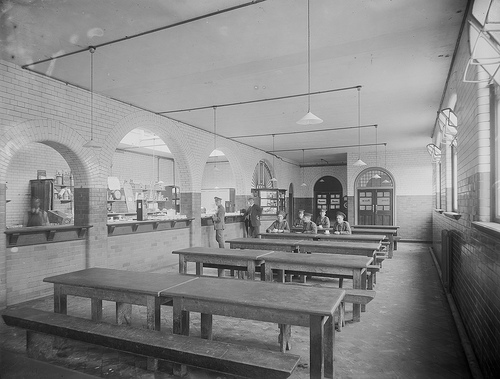
Following on from yesterday’s photo of soldiers in the Reading Room at the Elise Sandes Soldiers Home at the Curragh Camp in Kildare, this photo is of the Dining Room.

Thanks to macabee2012 for the following:
"This is the dining room of Miss Sandes Soldiers Home in the Curragh – one of over thirty such Homes attached to army locations all over Ireland, Founded by Elise Sandes of Tralee, Co Kerry, this network of Soldiers Homes was an evangelical missionary movement designed mainly to keep young soldiers out of the pubs and provide recreational facilities – as well as a bit of religion. The first Home was in Cork and later ones were in Queesntown (Cobh), Belfast, Parkgates Dublin, Ballykinler, Derry, among other towns; there were eight Homes in India in places such as Rawal Pindi, Quetta and Lucknow.
See History Ireland, vol. 13, issue 4, July/August 2005
"

This photo incidentally provides invaluable information about what the soldiers were eating at the time for their supper, and how much they were paying for their grub. A blackboard behind the counter lists dishes and prices. We’re assuming the cost was in pennies rather than shillings. Here they are (those that were possible to read):

Eggs & Bacon 3
Two Eggs 4/5?
Bacon & Tomatoes 4
Bacon & Onions 3
Bacon & Chips 3
Rissoles & Chips 3
Rissoles & Onions 3

Desserts
Apple Tart & Custard 2
Treacle & Custard or Rice 1
Blancmange & Jelly 2
Rice Pudding 1

Gorgeous account in from scooter2017 of this Dining Room in the 1960s:
"You could add another 50 years to this 1916 photo and little had changed. The long benches and tables were still the same. They did add a jukebox in the early 60s. It was in front of the pillar where that first soldier is standing. A record could be played for 3d.

Date: Sunday, 16 July 1916

NLI Ref.: EAS_2486

Priceless

Image by kevin dooley
Cost of raising a child to 17 in U.S.: 0,000.

Value: Priceless

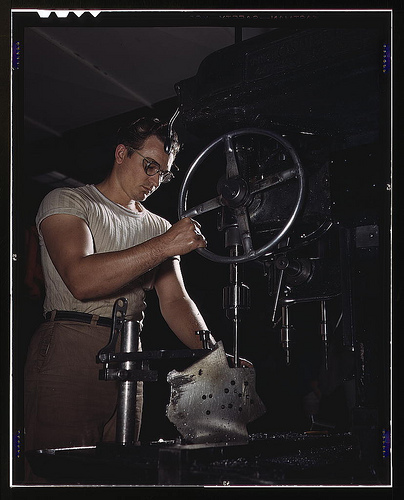
An employee in the drill-press section of North American’s huge machine shop runs mounting holes in a large dural casting, Inglewood, Calif. This plant produces the battle-tested B-25 (“Billy Mitchell”) bomber, used in General Doolittle’s raid on Tokyo, a

An employee in the drill-press section of North American’s huge machine shop runs mounting holes in a large dural casting, Inglewood, Calif. This plant produces the battle-tested B-25 (“Billy Mitchell”) bomber, used in General Doolittle’s raid on Tokyo, a

A few nice China machining large parts images I found:

An employee in the drill-press section of North American’s huge machine shop runs mounting holes in a large dural casting, Inglewood, Calif. This plant produces the battle-tested B-25 (“Billy Mitchell”) bomber, used in General Doolittle’s raid on Tokyo, a

Image by The Library of Congress
Palmer, Alfred T.,, photographer.

An employee in the drill-press section of North American’s huge machine shop runs mounting holes in a large dural casting, Inglewood, Calif. This plant produces the battle-tested B-25 ("Billy Mitchell") bomber, used in General Doolittle’s raid on Tokyo, and the P-51 ("Mustang") fighter plane which was first brought into prominence by the British raid on Dieppe

1942 Oct.

1 transparency : color.

Notes:
Title from FSA or OWI agency caption.
Transfer from U.S. Office of War Information, 1944.

Subjects:
Airplane industry
Assembly-line methods
World War, 1939-1945
Drilling
United States–California–Inglewood

Format: Transparencies–Color

Rights Info: No known restrictions on publication.

Repository: Library of Congress, Prints and Photographs Division, Washington, D.C. 20540 USA, hdl.loc.gov/loc.pnp/pp.print

Part Of: Farm Security Administration – Office of War Information Collection 12002-38 (DLC) 93845501

General information about the FSA/OWI Color Photographs is available at hdl.loc.gov/loc.pnp/pp.fsac

Higher resolution image is available (Persistent URL): hdl.loc.gov/loc.pnp/fsac.1a35306

Call Number: LC-USW36-262

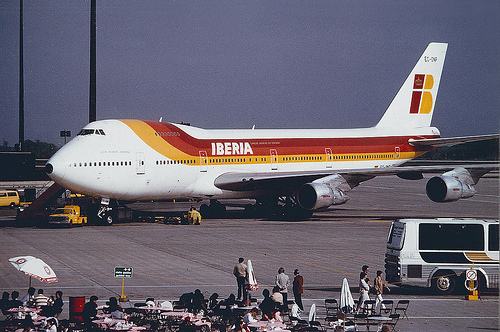
Iberia 747-256B EC-DNP

Image by caribb
A Blast from the Past
-A terrasse with a view LOL 🙂 There used to be annual air shows at Mirabel where part of the airport tarmac was used as a static display area for military and some commercial planes. I loved it because you could still get really close to scheduled flights like this Iberia 747-200 that for many years flew MAD-YUL-MEX… thus the little outdoor café right there in front of the 747… Imagine this today LOL….!!? there’s just no way, the world isn’t as innocent anymore. Still though I was lucky enough to experience this and get this cool shot and enjoy the air show. I marked on the photo "Spring 1983"

www.rzjets.net/aircraft/search.php?ftid=9029&field=re…

*Airplanes 101* (See Airplanes 101 Set)
Name: Boeing 747-200,
Manufacturer: Boeing (USA) .
Main Role: large capacity long range mainline jetliner
Basic design: Four engines double aisle wide body jet. Knows as a "Jumbo Jet"
Capacity: Roughly 395-500 passengers
Range: 9000km -12700km
First delivery date: 1970
Still in production in 2006: No
Easily confused for: ..nothing. It’s unique to itself but these two models can be easily confused for the 747-300 and 747-400.
Main identifying points: Look for the the "hump" or second floor at the front of the plane that houses the cockpit and upper deck cabin f the aircraft. Also the fact there are passenger seats more forward than the cockpit. No other jetliner has these features. Everything else is secondary: A very large and massive tail, 4 very large wing mounted engines. The 747-100 and 747-200 have antennae located a
at the wingtips facing backwards (seen best from under the plane on the ground while it’s in flight), 4 sets of main undercarriage landing gear. Early models of the -100 only had 3 second floor windows on each side of the upper deck. Later models have a regular set of closely positioned windows instead. Both versions has a standard short length upper deck compared to the 747-400 whose deck was lengthened significantly.
Examples of Main Operators: Today the 747-100 is pretty much out of service. They may be cargo carriers still flying it. JAL, ANA and I believe Northwest still fly the occasional 747-200. The main operators of it’s day were Pan Am, TWA, Lufthansa, BOAC, Air France, Air Canada, JAL, Qantas, Varig, United, Continental, Air India, Sabena, Swissair, SAS, Alitalia, Olympic among many.

For more pics of 747 aircraft see the Boeing 747 group here at Flickr