Some recent metal manufacturing auctions on eBay:
[wprebay kw=”metal+manufacturing” num=”0″ ebcat=”-1″]
[wprebay kw=”metal+manufacturing” num=”1″ ebcat=”-1″]
Aluminium Machining China
Some recent metal manufacturing auctions on eBay:
[wprebay kw=”metal+manufacturing” num=”0″ ebcat=”-1″]
[wprebay kw=”metal+manufacturing” num=”1″ ebcat=”-1″]
A few nice cnc rapid prototyping images I found:
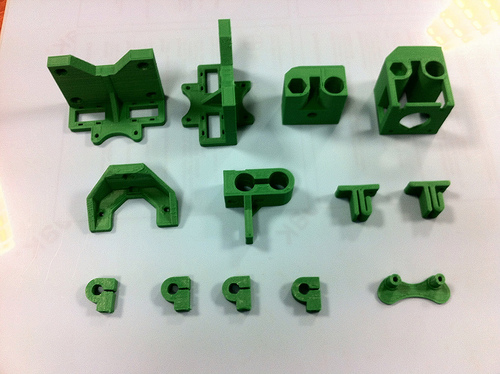
printrbot
Image by eok.gnah
Some cool cnc services images:
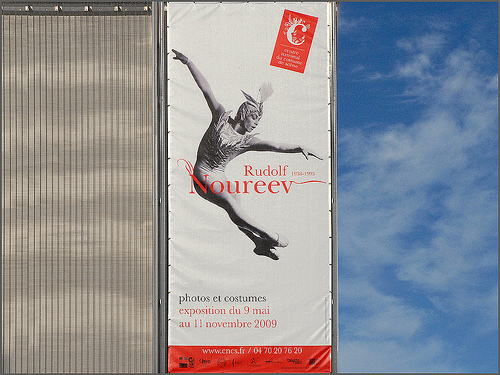
Exposition Rudolf Noureev (CNCS, Moulins)
Image by dalbera
«Rudolf Noureev, 1938 – 1993, la trame d’une vie», l’affiche de l’exposition au Centre National du Costume de Scène (CNCS) à Moulins des photos et costumes créés pour le danseur d’origine russe Rudolf Nourrev et pour les ballets qu’il a chorégraphiés.
A l’occasion de la donation au Centre National du Costume de Scène (Cncs) par la Fondation Rudolf Noureev d’une très importante collection de documents, d’objets, de mobiliers, d’oeuvres d’art, de costumes… ayant appartenu au célèbre danseur et chorégraphe et en préfiguration du «lieu de mémoire Rudolf Noureev» qui sera installé dans les locaux du Centre à Moulins, le Cncs et la Fondation Rudolf Noureev présentent, jusqu’en novembre 2009, l’exposition «Rudolf Noureev, 1938 – 1993, la trame d’une vie», qui évoque, à travers photographies, costumes, maquettes…la vie du danseur et de ses ballets.
La beauté des costumes et la notoriété des danseurs (Rudolf Noureev et ses partenaires : Margot Fonteyn, Carla Fracci, Noëlla Pontois,..) qui les ont portés pour interpréter les grandes pièces du répertoire classique (Le Lac des Cygnes, Casse-Noisette, La Belle au bois Dormant, Raymonda, La Bayadère, Marguerite et Armand, etc) sont les grands atouts de cette exposition.
Les amateurs de danse classique en sortent enchantés car ils ont pu revivre les moments d’émotion intense liés aux ballets qu’ils ont vus mille fois (la salle présentant sur un immense écran l’acte des Ombres de la Bayadère est une magnifique trouvaille muséographique). Il n’est pas certain que des visiteurs moins cultivés y soient aussi sensibles malgré les efforts des muséographes pour contextualiser les costumes, soigner leur éclairage, évoquer les spectacles avec la diffusion de quelques extraits musicaux, présenter des photographies (trop peu nombreuses, à mon avis) et diffuser trois heures de films sur l’oeuvre de Rudolf Noureev dans l’auditorium du CNCS (au demeurant, des films d’archives de mauvaise qualité et peu audibles mais peut-être est ce la faute du projecteur ou de son réglage déficient ?)
On oublie encore trop souvent dans les milieux professionnels des musées que la culture d’un visiteur est un capital qui s’accumule et que les oeuvres seules ne parlent qu’à ceux qui en connaissent l’origine, le contexte de leur création et qui savent en déchiffrer les interelations.
Certes, les cartels et documents d’aide à la visite, les guides papier, les animations ou les visites guidées apportent les éléments d’information qui pourraient manquer à certains visiteurs mais leur disponibilité se heurte souvent à des problèmes matériels ou budgétaires.
A coté de ces offres traditionnelles, il faut que les institutions s’efforcent de fournir des explications permanentes, sous une forme plus moderne, à proximité des oeuvres originales.
Les anglo-saxons ont moins de difficultés que les français à l’admettre et n’hésitent pas à installer dans les musées des centres d’interprétation dont le but est informatif et pédagogique mais il ne s’agit pas nécessairement d’importantes et complexes installations. Aujourd’hui, ce concept, peu appliqué dans les musées artistiques de notre pays, peut pourtant prendre des formes très légères grâce aux technologies numériques. La rénovation réussie du musée de la musique à Paris est à donner en exemple.
Les dispositifs multimédias offrent aujourd’hui aux muséographes un grand nombre de possibilités, leur permettant d’apporter de manière interactive des données complémentaires, de faire voir des images, des dessins, des films et de personnaliser les réponses apportées aux questions des visiteurs en tenant compte de leurs langues, ou de leurs besoins spécifiques (handicaps). Ces outils peuvent se faire discrets, être répartis dans une exposition, tout en étant organisés en réseau pour en faciliter la gestion et l’actualisation.
Le CNCS aurait pu les utiliser par exemple en mettant dans les vitrines ou à proximité de petits écrans numériques diffusant des photographies, des dessins ou des extraits de films des danseurs portant les costumes exposés. Des extraits sonores plus nombreux auraient pu être rendus accessibles, via des casques ou d’autres systèmes d’écoute (hauts parleurs directifs, cloches sonores), pour diffuser des interviews d’artistes ou des créateurs des costumes. Un audioguide multimédia (payant ou gratuit) aurait pu, a minima, apporter ce type d’informations.
Le motif invoqué par les institutions culturelles artistiques pour justifier leur frilosité en matière de médiation numérique est souvent lié à des questions financières ou à l’absence de compétences internes, toutefois l’examen des emplois des institutions et de ses budgets montre souvent que les priorités des conservateurs ont été différentes et se sont portées sur l’écrit traditionnel, jugé plus valorisant pour leurs carrières et la présence d’écrans à coté des oeuvres originales est souvent refusée a priori.
Le CNCS a encore l’excuse de sa jeunesse mais sa situation géographique excentrée et ses missions très particulières l’obligent à innover pour attirer les visiteurs qui ne sont pas tous des amateurs de danse classique.
Enfin, la facilité de l’accès à distance sur le web aux informations et aux données est devenu un élément capital dans la politique de communication et de diffusion des institutions culturelles. Le CNCS a ouvert un site web très réussi sur le plan esthétique (voir plus haut), réalisé par une société parisienne de talent, mais qui a le défaut d’être entièrement fabriqué en Flash. La technologie employée ne remplit pas les conditions d’accessibilité imposées aux services publics sur le web, entre autres difficultés, les textes ne sont ni copiables, ni traitables par une machine de traduction en braille et le site n’est probablement pas très commode à actualiser. Une autre solution technique aurait été préférable mais dans la situation présente la réalisation d’un site parallèle en html apparaît indispensable.
Dernière difficulté pour les possesseurs d’iphone, le site du Cncs en flash n’est pas lisible mais dans ce cas, c’est la politique d’Apple qui est en cause et pas celle du Centre ! Néanmoins, les institutions culturelles doivent aussi se préoccuper de leur visibilité sur les téléphones portables modernes qui bientôt seront les terminaux d’accès au web les plus répandus et dont l’utilisation par les visiteurs et les touristes va devenir systématique.
Neil Bush & Mark Gearan
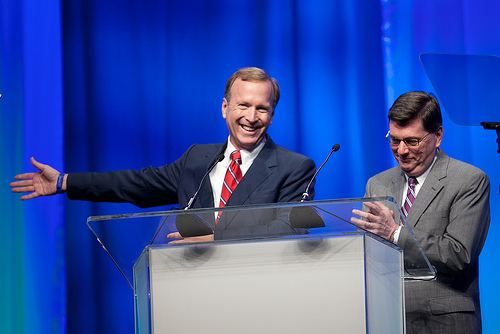
Image by jdlasica
Neil Bush, chairman of the Points of Light Institute, and Mark Gearan, chair of the federal agency the Corporation for National and Community Service (CNCS).
Neil Bush & Mark Gearan
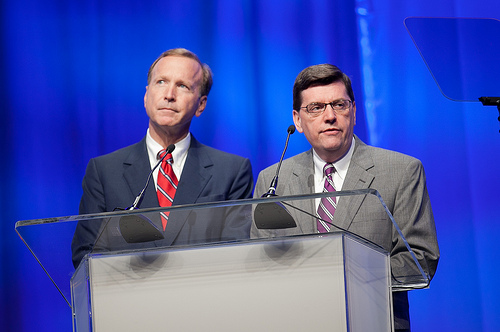
Image by jdlasica
Neil Bush, chairman of the Points of Light Institute, and Mark Gearan, chair of the federal agency the Corporation for National and Community Service (CNCS).
Some recent precision machined products auctions on eBay:
[wprebay kw=”precision+machined+products” num=”3″ ebcat=”-1″]
[wprebay kw=”precision+machined+products” num=”4″ ebcat=”-1″]
[wprebay kw=”precision+machined+products” num=”5″ ebcat=”-1″]
[wprebay kw=”precision+machined+products” num=”6″ ebcat=”-1″]
Cnc Machining Services China on eBay:
[wprebay kw=”cnc+machining+services” num=”0″ ebcat=”-1″]
[wprebay kw=”cnc+machining+services” num=”1″ ebcat=”-1″]
[wprebay kw=”cnc+machining+services” num=”2″ ebcat=”-1″]
Machining Metal on eBay:
[wprebay kw=”machining+metal” num=”0″ ebcat=”-1″]
[wprebay kw=”machining+metal” num=”1″ ebcat=”-1″]
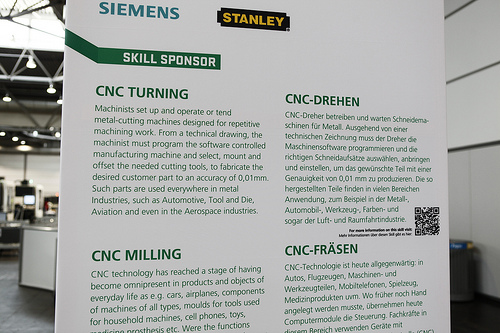
WSC2013_skill42_mi_001
Image by WorldSkills
HEIDENHAIN's Top Class Lathe Control Offers New Features
TURN, a dialogue guidance system that helps the operator structure the program and define technology data, machining China strategy and global data settings in an easy mode. Further, the CNC PILOT 640 has options for full-surface machining China with C or Y axis …
Read more on Marketwired (press release)
Transfer Machine Offers High-Concentricity Finishing
The modular transfer system can be equipped with CNC profiling heads for precision Turning China; three-axis multi-process modules; and accessories for rolling, marking, knurling, broaching or milling China. The company will also display its Omni-Turn transfer …
Read more on Modern Machine Shop
Some cool cnc custom machining China images:
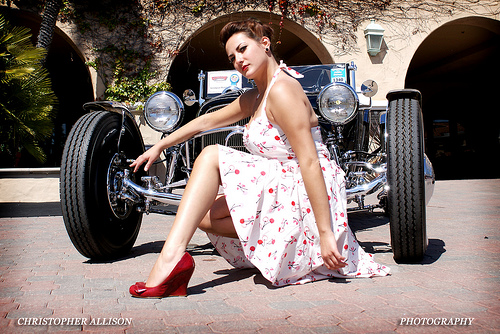
Pinup Stefanina Good Guys Del Mar Nationals – Sunday13
Image by christopherallisonphotography.com
Christopher Allison Photography
619-368-2202
Pinup Model Stefanina
ALL IMAGES ARE COPYRIGHT PROTECTED & AVAILABLE FOR PURCHASE OR LICENCING
www.christopherallisonphotography.com
BUY THIS PRINT – rockabillyboy72.imagekind.com
“THE BLACK WIDOW” Builders: Wally Olson (1952), Bill Scott (1954) and Richard Riddell (2005) The garage find of the century! How long have you been hot rodding cars–since the 1950’s? Many of us got started in the 50’s and 60’s. (For you real old birds out there that remember hot rodding “T” roadsters with Roto-Faze ignitions, Ruxtell 2-speed rear axles, Riley 2-port heads and Laurel lowering kits, well what can we say you’re a generation before us and we take our hats off to you ‘original’ hot rodders.) BUT for all of us “The Black Widow” is a serious piece of 1950’s hot rodding annals and a benchmark for the industry! In an article in Hot Rod Deluxe, July 2008 entitled, “Tangled Web” the full-story of Richard Riddell’s quest to restore the original Black Widow had its public debut. Hot Rod Deluxe reported the car’s winning the 2008 Grand National Roadster Show which was a dream come true, taking “Best Early Altered T Roadster”. (See also Rod and Custom, June 2008.) It was also a contender for the Bruce Meyer award at the ‘Grand Nats.’ Why do guys like Richard Riddell (and the rest of us) spend years (3400 hours in Richard’s case) restoring a car we found in a barn? Answer: ‘For the love of the sport!’ All of us remember some other cars with similar names, for instance the ‘Black Widow’ Monogram model car (“1/24 scale model/Ford ‘T’ Pickup Rod/removable top” by Mattel quality hobby kits). Also, we remember General Motors/Chevrolet coming out in 1957 with their first racing version Chevy called “The Black Widow.” But predating both of these historic cars is the “The Black Widow” built by Wally Olson to help keep his kids out of trouble in 1952 and first débuted in Hot Rod magazine, September 1954 in an article entitled, “Lil’ Beau T”, which read, “Wally Olson, Fresno, California, automotive machinist, is the lucky owner and builder. Duane Taylor was called in for the body work.” It added as to why he built the car, “What with so much current upheaval in the teen-age ranks, Wally figured that a sure-fire way to eliminate those free-time, nothing-to-do troubles would be to interest them (his 9 and 12 year old sons) in a rod. So far the idea has worked like a charm.” In time the family moved on to other projects and Bill Scott purchased the car and redid it with fenders, headlights and all the stuff to make it ‘street legal’—as we used to call it! The first documentation of the car being called “Black Widow” is found in the magazine Rodding and Re-styling, August 1957 issue. That article reported Bill Scott’s changes to Wally Olson’s car, “The front end was revised to incorporate a tubular axle and tube shocks. The new owners also equipped the car with a new power plant. The original mill is a ’41 Merc bored out .100 inch over stock, ported and relieved…includes 8.5-to-1 Offenhauser heads, a Weber full-race cam, and an Evans 3-caberator manifold.” [Note: The several engines that were housed in this car later varied; see final Merc build details below.] Don’t you love the sound of that “ported and relieved” and “full-race cam”—when’s the last time you used those terms? By the time the 1959 Hot Rod Annual was published the car-title stuck for all time “The Black Widow.” Riddell’s 2-Year Renovation! According to long time race car builder Richard Riddell’s log he states, “Sometime in 1955 Wally sold his roadster to Bill Scott. Bill again called on Duane Taylor to turn the car into a bonified street rod. With the additional of windshield, head lights, tail lings, and fenders it was finally able to jump into his little Hot Rod and go crusin’. The pin stripping was done by none other than Dean Jefferies with the familiar cobweb and spider on the turtle deck.” He reports that the car’s first win was “…a five foot trophy at the Sacramento AutoRama in 1957 for ‘Best Roadster’. Yes, Bill’s car was having the time of its life being one of the best looking early California street roadsters of all time.” Richard states, “Bill Scott died around 1987…for several years the car languished…getting worse and worse…as is so often the case for old Hot Rods.” The garage find in 2005 notes, “At a glance the roadster didn’t look that bad.” But the Naugahyde and carpet were shot, fenders, original wheels and hub caps to name a few problems for the yet to begin restoration. Riddell notes, “Under a somewhat decent body and paint job lurked a mess that went beyond your worst nightmare.” He adds, “I began wondering how I could salvage this little beauty in the rough. Not that many people have restored an old Hot Rod but, those who have know what I’m talking about. It’s much harder than building a rod from scratch. But the roadster was begging to be restored and I’m glad that I was chosen to do it.”and#9472;Richard died shortly after finishing the project but happily he was able to see “The Black Widow” win the ‘Grand Nats’ and have a feature center-spread article in Hot Rod Deluxe. Here are a few of the Riddell-engineered refinements to this original car. and#61692; Recessed pockets had to be built in the frame rails to accept the front motor mounts which double as water pumps. and#61692; New front radius rods were built out of heavy wall chrome-moly tubing. The original ones were so poorly made that they were unsafe. and#61692; The correct master cylinder banjo fitting was not available so, he fabricated a new one from scratch. and#61692; The tooling mandral had to be CNC machined to facilitate metal spinning new brass tail pipe end bells. Hey would you agree? Hot rodding is an art form and some Hot Rod Artists have mastered the craft and Richard Riddell is one of them!!! Reconstruction points of interest: and#61656; Original steel body and doors welded shut and#61656; ‘42 Merc 274 c.i flathead (current engine) and#61656; ’39 Lincoln-Zephyr tranny and#61656; ’34 Ford rear with Halibrand quick-change center and enclosed drive shaft and#61656; ’39 Ford hydraulic brakes all around and wide “5” 16-iunch wheels and caps and#61656; ’37 Ford tube axle and#61656; Engine by RPM Machine and#61656; Chrome by Ace Plating and#61656; Frame done by Capps Powder Coat and#61656; Body/paint by Showtime Customs and#61656; Upholstery by Brents Why is the car being sold? To quote his wife Pat, “Unfortunately, Richard passed away on March 18, 2008 and will not get to enjoy seeing the new owner drive away with a piece of automotive history.” Richard’s loyal wife Pat grew up around racing since she was 9 years old. Her maiden name was Rodriguez. If you grew up at Lion’s Dragstrip, as she did, you may remember her father’s rail? He and his brother ran an old top alky rail under the name “Rodriguez Brothers”. Pat said, ‘As I was growing up I often wondered how I would ever meet someone to marry, since all that our family ever did was go to the drags. Then one day Richard came along and met me at the Winternationals.’ Well the rest is history. For Pat after Richard’s death there are just too many memories attached to all the memorabilia, race cars and hot rods in their storage—she would like to sell “The Black Widow” to some deserving hot rodder. Terms of sale: 5,000.00. Please contact Don Burdge at DreamRodLocator or call him at 619.804.8033. You should call me before Leno does! We have hundreds of additional photos and several 50’s and current magazine articles available to seriously interested buyers.
BUY THIS PRINT – rockabillyboy72.imagekind.com
Pinup Breanna Good Guys Del Mar Nationals7
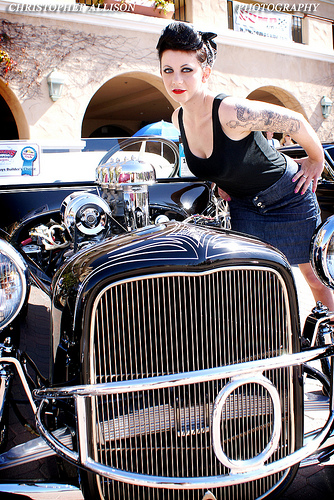
Image by christopherallisonphotography.com
Model: Breanna
www.christopherallisonphotography.com
All Images are Copyright Protected & Available for Purchase and Licencing
“THE BLACK WIDOW” Builders: Wally Olson (1952), Bill Scott (1954) and Richard Riddell (2005) The garage find of the century! How long have you been hot rodding cars–since the 1950’s? Many of us got started in the 50’s and 60’s. (For you real old birds out there that remember hot rodding “T” roadsters with Roto-Faze ignitions, Ruxtell 2-speed rear axles, Riley 2-port heads and Laurel lowering kits, well what can we say you’re a generation before us and we take our hats off to you ‘original’ hot rodders.) BUT for all of us “The Black Widow” is a serious piece of 1950’s hot rodding annals and a benchmark for the industry! In an article in Hot Rod Deluxe, July 2008 entitled, “Tangled Web” the full-story of Richard Riddell’s quest to restore the original Black Widow had its public debut. Hot Rod Deluxe reported the car’s winning the 2008 Grand National Roadster Show which was a dream come true, taking “Best Early Altered T Roadster”. (See also Rod and Custom, June 2008.) It was also a contender for the Bruce Meyer award at the ‘Grand Nats.’ Why do guys like Richard Riddell (and the rest of us) spend years (3400 hours in Richard’s case) restoring a car we found in a barn? Answer: ‘For the love of the sport!’ All of us remember some other cars with similar names, for instance the ‘Black Widow’ Monogram model car (“1/24 scale model/Ford ‘T’ Pickup Rod/removable top” by Mattel quality hobby kits). Also, we remember General Motors/Chevrolet coming out in 1957 with their first racing version Chevy called “The Black Widow.” But predating both of these historic cars is the “The Black Widow” built by Wally Olson to help keep his kids out of trouble in 1952 and first débuted in Hot Rod magazine, September 1954 in an article entitled, “Lil’ Beau T”, which read, “Wally Olson, Fresno, California, automotive machinist, is the lucky owner and builder. Duane Taylor was called in for the body work.” It added as to why he built the car, “What with so much current upheaval in the teen-age ranks, Wally figured that a sure-fire way to eliminate those free-time, nothing-to-do troubles would be to interest them (his 9 and 12 year old sons) in a rod. So far the idea has worked like a charm.” In time the family moved on to other projects and Bill Scott purchased the car and redid it with fenders, headlights and all the stuff to make it ‘street legal’—as we used to call it! The first documentation of the car being called “Black Widow” is found in the magazine Rodding and Re-styling, August 1957 issue. That article reported Bill Scott’s changes to Wally Olson’s car, “The front end was revised to incorporate a tubular axle and tube shocks. The new owners also equipped the car with a new power plant. The original mill is a ’41 Merc bored out .100 inch over stock, ported and relieved…includes 8.5-to-1 Offenhauser heads, a Weber full-race cam, and an Evans 3-caberator manifold.” [Note: The several engines that were housed in this car later varied; see final Merc build details below.] Don’t you love the sound of that “ported and relieved” and “full-race cam”—when’s the last time you used those terms? By the time the 1959 Hot Rod Annual was published the car-title stuck for all time “The Black Widow.” Riddell’s 2-Year Renovation! According to long time race car builder Richard Riddell’s log he states, “Sometime in 1955 Wally sold his roadster to Bill Scott. Bill again called on Duane Taylor to turn the car into a bonified street rod. With the additional of windshield, head lights, tail lings, and fenders it was finally able to jump into his little Hot Rod and go crusin’. The pin stripping was done by none other than Dean Jefferies with the familiar cobweb and spider on the turtle deck.” He reports that the car’s first win was “…a five foot trophy at the Sacramento AutoRama in 1957 for ‘Best Roadster’. Yes, Bill’s car was having the time of its life being one of the best looking early California street roadsters of all time.” Richard states, “Bill Scott died around 1987…for several years the car languished…getting worse and worse…as is so often the case for old Hot Rods.” The garage find in 2005 notes, “At a glance the roadster didn’t look that bad.” But the Naugahyde and carpet were shot, fenders, original wheels and hub caps to name a few problems for the yet to begin restoration. Riddell notes, “Under a somewhat decent body and paint job lurked a mess that went beyond your worst nightmare.” He adds, “I began wondering how I could salvage this little beauty in the rough. Not that many people have restored an old Hot Rod but, those who have know what I’m talking about. It’s much harder than building a rod from scratch. But the roadster was begging to be restored and I’m glad that I was chosen to do it.”and#9472;Richard died shortly after finishing the project but happily he was able to see “The Black Widow” win the ‘Grand Nats’ and have a feature center-spread article in Hot Rod Deluxe. Here are a few of the Riddell-engineered refinements to this original car. and#61692; Recessed pockets had to be built in the frame rails to accept the front motor mounts which double as water pumps. and#61692; New front radius rods were built out of heavy wall chrome-moly tubing. The original ones were so poorly made that they were unsafe. and#61692; The correct master cylinder banjo fitting was not available so, he fabricated a new one from scratch. and#61692; The tooling mandral had to be CNC machined to facilitate metal spinning new brass tail pipe end bells. Hey would you agree? Hot rodding is an art form and some Hot Rod Artists have mastered the craft and Richard Riddell is one of them!!! Reconstruction points of interest: and#61656; Original steel body and doors welded shut and#61656; ‘42 Merc 274 c.i flathead (current engine) and#61656; ’39 Lincoln-Zephyr tranny and#61656; ’34 Ford rear with Halibrand quick-change center and enclosed drive shaft and#61656; ’39 Ford hydraulic brakes all around and wide “5” 16-iunch wheels and caps and#61656; ’37 Ford tube axle and#61656; Engine by RPM Machine and#61656; Chrome by Ace Plating and#61656; Frame done by Capps Powder Coat and#61656; Body/paint by Showtime Customs and#61656; Upholstery by Brents Why is the car being sold? To quote his wife Pat, “Unfortunately, Richard passed away on March 18, 2008 and will not get to enjoy seeing the new owner drive away with a piece of automotive history.” Richard’s loyal wife Pat grew up around racing since she was 9 years old. Her maiden name was Rodriguez. If you grew up at Lion’s Dragstrip, as she did, you may remember her father’s rail? He and his brother ran an old top alky rail under the name “Rodriguez Brothers”. Pat said, ‘As I was growing up I often wondered how I would ever meet someone to marry, since all that our family ever did was go to the drags. Then one day Richard came along and met me at the Winternationals.’ Well the rest is history. For Pat after Richard’s death there are just too many memories attached to all the memorabilia, race cars and hot rods in their storage—she would like to sell “The Black Widow” to some deserving hot rodder. Terms of sale: 5,000.00. Please contact Don Burdge at DreamRodLocator or call him at 619.804.8033. You should call me before Leno does! We have hundreds of additional photos and several 50’s and current magazine articles available to seriously interested buyers.
Machining Stainless Steel on eBay:
[wprebay kw=”machining+stainless+steel” num=”0″ ebcat=”-1″]
[wprebay kw=”machining+stainless+steel” num=”1″ ebcat=”-1″]
Most popular stainless steel machining China eBay auctions:
[wprebay kw=”stainless+steel+machining” num=”0″ ebcat=”-1″]
[wprebay kw=”stainless+steel+machining” num=”1″ ebcat=”-1″]