Homes on the hill

Homes on the hill

Some cool machining turning images:

Houses on the hill

Image by ▓▒░ TORLEY ░▒▓
Ultra! Ultra! Study all about it!

Winch

Image by erroltookaphoto
An old boat winch to pull in fishing boats in from the sea. Sitting on the beach all year barely being employed has seen it worn away.

At the finish of the summer, the neighbors asked me to support pull in a single of the fishing boats with this ancient machine. I never realised how heavy a boat actually was until I located myself single handedly turning the crank on this issue.

Steven F. Udvar-Hazy Center: Photomontage of SR-71 on the port side

Steven F. Udvar-Hazy Center: Photomontage of SR-71 on the port side

A handful of nice surface grinding aluminum photos I found:

Steven F. Udvar-Hazy Center: Photomontage of SR-71 on the port side
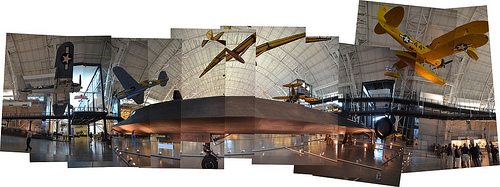
Image by Chris Devers
Posted by way of e-mail to ☛ HoloChromaCinePhotoRamaScope‽: cdevers.posterous.com/panoramas-of-the-sr-71-blackbird-at…. See the full gallery on Posterous …

• • • • •

See a lot more images of this, and the Wikipedia post.

Details, quoting from Smithsonian National Air and Space Museum | Lockheed SR-71 Blackbird:

No reconnaissance aircraft in history has operated globally in a lot more hostile airspace or with such comprehensive impunity than the SR-71, the world’s quickest jet-propelled aircraft. The Blackbird’s efficiency and operational achievements placed it at the pinnacle of aviation technology developments throughout the Cold War.

This Blackbird accrued about 2,800 hours of flight time for the duration of 24 years of active service with the U.S. Air Force. On its final flight, March 6, 1990, Lt. Col. Ed Yielding and Lt. Col. Joseph Vida set a speed record by flying from Los Angeles to Washington, D.C., in 1 hour, 4 minutes, and 20 seconds, averaging 3,418 kilometers (2,124 miles) per hour. At the flight’s conclusion, they landed at Washington-Dulles International Airport and turned the airplane over to the Smithsonian.

Transferred from the United States Air Force.

Manufacturer:
Lockheed Aircraft Corporation

Designer:
Clarence L. &quotKelly&quot Johnson

Date:
1964

Nation of Origin:
United States of America

Dimensions:
All round: 18ft five 15/16in. x 55ft 7in. x 107ft 5in., 169998.5lb. (5.638m x 16.942m x 32.741m, 77110.8kg)
Other: 18ft 5 15/16in. x 107ft 5in. x 55ft 7in. (5.638m x 32.741m x 16.942m)

Components:
Titanium

Physical Description:
Twin-engine, two-seat, supersonic strategic reconnaissance aircraft airframe constructed largley of titanium and its alloys vertical tail fins are constructed of a composite (laminated plastic-type material) to minimize radar cross-section Pratt and Whitney J58 (JT11D-20B) turbojet engines function huge inlet shock cones.

Long Description:
No reconnaissance aircraft in history has operated in more hostile airspace or with such full impunity than the SR-71 Blackbird. It is the fastest aircraft propelled by air-breathing engines. The Blackbird’s performance and operational achievements placed it at the pinnacle of aviation technologies developments throughout the Cold War. The airplane was conceived when tensions with communist Eastern Europe reached levels approaching a complete-blown crisis in the mid-1950s. U.S. military commanders desperately required precise assessments of Soviet worldwide military deployments, particularly near the Iron Curtain. Lockheed Aircraft Corporation’s subsonic U-2 (see NASM collection) reconnaissance aircraft was an able platform but the U. S. Air Force recognized that this fairly slow aircraft was currently vulnerable to Soviet interceptors. They also understood that the fast development of surface-to-air missile systems could put U-two pilots at grave threat. The danger proved reality when a U-2 was shot down by a surface to air missile over the Soviet Union in 1960.

Lockheed’s initial proposal for a new higher speed, higher altitude, reconnaissance aircraft, to be capable of avoiding interceptors and missiles, centered on a design and style propelled by liquid hydrogen. This proved to be impracticable simply because of considerable fuel consumption. Lockheed then reconfigured the design and style for conventional fuels. This was feasible and the Central Intelligence Agency (CIA), already flying the Lockheed U-two, issued a production contract for an aircraft designated the A-12. Lockheed’s clandestine ‘Skunk Works’ division (headed by the gifted style engineer Clarence L. &quotKelly&quot Johnson) developed the A-12 to cruise at Mach 3.two and fly well above 18,288 m (60,000 feet). To meet these difficult requirements, Lockheed engineers overcame a lot of daunting technical challenges. Flying far more than three instances the speed of sound generates 316° C (600° F) temperatures on external aircraft surfaces, which are adequate to melt standard aluminum airframes. The style group chose to make the jet’s external skin of titanium alloy to which shielded the internal aluminum airframe. Two standard, but extremely effective, afterburning turbine engines propelled this exceptional aircraft. These energy plants had to operate across a large speed envelope in flight, from a takeoff speed of 334 kph (207 mph) to much more than 3,540 kph (2,200 mph). To avoid supersonic shock waves from moving inside the engine intake causing flameouts, Johnson’s group had to style a complicated air intake and bypass program for the engines.

Skunk Functions engineers also optimized the A-12 cross-section design and style to exhibit a low radar profile. Lockheed hoped to attain this by carefully shaping the airframe to reflect as tiny transmitted radar energy (radio waves) as attainable, and by application of particular paint designed to absorb, rather than reflect, those waves. This treatment became one particular of the very first applications of stealth technologies, but it never totally met the style objectives.

Test pilot Lou Schalk flew the single-seat A-12 on April 24, 1962, following he became airborne accidentally in the course of high-speed taxi trials. The airplane showed great promise but it required considerable technical refinement prior to the CIA could fly the first operational sortie on May possibly 31, 1967 – a surveillance flight more than North Vietnam. A-12s, flown by CIA pilots, operated as portion of the Air Force’s 1129th Specific Activities Squadron beneath the &quotOxcart&quot program. While Lockheed continued to refine the A-12, the U. S. Air Force ordered an interceptor version of the aircraft designated the YF-12A. The Skunk Performs, nevertheless, proposed a &quotspecific mission&quot version configured to conduct post-nuclear strike reconnaissance. This system evolved into the USAF’s familiar SR-71.

Lockheed built fifteen A-12s, which includes a specific two-seat trainer version. Two A-12s have been modified to carry a particular reconnaissance drone, designated D-21. The modified A-12s have been redesignated M-21s. These have been designed to take off with the D-21 drone, powered by a Marquart ramjet engine mounted on a pylon among the rudders. The M-21 then hauled the drone aloft and launched it at speeds high enough to ignite the drone’s ramjet motor. Lockheed also built 3 YF-12As but this kind in no way went into production. Two of the YF-12As crashed in the course of testing. Only 1 survives and is on show at the USAF Museum in Dayton, Ohio. The aft section of one particular of the &quotwritten off&quot YF-12As which was later employed along with an SR-71A static test airframe to manufacture the sole SR-71C trainer. 1 SR-71 was lent to NASA and designated YF-12C. Which includes the SR-71C and two SR-71B pilot trainers, Lockheed constructed thirty-two Blackbirds. The initial SR-71 flew on December 22, 1964. Because of extreme operational fees, military strategists decided that the far more capable USAF SR-71s need to replace the CIA’s A-12s. These have been retired in 1968 soon after only 1 year of operational missions, mainly over southeast Asia. The Air Force’s 1st Strategic Reconnaissance Squadron (portion of the 9th Strategic Reconnaissance Wing) took more than the missions, flying the SR-71 beginning in the spring of 1968.

Right after the Air Force began to operate the SR-71, it acquired the official name Blackbird– for the unique black paint that covered the airplane. This paint was formulated to absorb radar signals, to radiate some of the tremendous airframe heat generated by air friction, and to camouflage the aircraft against the dark sky at high altitudes.

Knowledge gained from the A-12 system convinced the Air Force that flying the SR-71 safely necessary two crew members, a pilot and a Reconnaissance Systems Officer (RSO). The RSO operated with the wide array of monitoring and defensive systems installed on the airplane. This gear included a sophisticated Electronic Counter Measures (ECM) technique that could jam most acquisition and targeting radar. In addition to an array of sophisticated, high-resolution cameras, the aircraft could also carry equipment designed to record the strength, frequency, and wavelength of signals emitted by communications and sensor devices such as radar. The SR-71 was made to fly deep into hostile territory, avoiding interception with its tremendous speed and high altitude. It could operate safely at a maximum speed of Mach 3.3 at an altitude more than sixteen miles, or 25,908 m (85,000 ft), above the earth. The crew had to put on stress suits comparable to these worn by astronauts. These suits were essential to shield the crew in the event of sudden cabin stress loss although at operating altitudes.

To climb and cruise at supersonic speeds, the Blackbird’s Pratt &amp Whitney J-58 engines had been made to operate constantly in afterburner. Even though this would appear to dictate high fuel flows, the Blackbird truly accomplished its very best &quotgas mileage,&quot in terms of air nautical miles per pound of fuel burned, during the Mach 3+ cruise. A typical Blackbird reconnaissance flight might require many aerial refueling operations from an airborne tanker. Each time the SR-71 refueled, the crew had to descend to the tanker’s altitude, typically about six,000 m to 9,000 m (20,000 to 30,000 ft), and slow the airplane to subsonic speeds. As velocity decreased, so did frictional heat. This cooling impact triggered the aircraft’s skin panels to shrink considerably, and these covering the fuel tanks contracted so considerably that fuel leaked, forming a distinctive vapor trail as the tanker topped off the Blackbird. As quickly as the tanks were filled, the jet’s crew disconnected from the tanker, relit the afterburners, and again climbed to higher altitude.

Air Force pilots flew the SR-71 from Kadena AB, Japan, throughout its operational career but other bases hosted Blackbird operations, also. The 9th SRW sometimes deployed from Beale AFB, California, to other places to carryout operational missions. Cuban missions had been flown straight from Beale. The SR-71 did not begin to operate in Europe until 1974, and then only temporarily. In 1982, when the U.S. Air Force primarily based two aircraft at Royal Air Force Base Mildenhall to fly monitoring mission in Eastern Europe.

When the SR-71 became operational, orbiting reconnaissance satellites had already replaced manned aircraft to collect intelligence from sites deep inside Soviet territory. Satellites could not cover each geopolitical hotspot so the Blackbird remained a important tool for global intelligence gathering. On numerous occasions, pilots and RSOs flying the SR-71 offered data that proved crucial in formulating successful U. S. foreign policy. Blackbird crews provided crucial intelligence about the 1973 Yom Kippur War, the Israeli invasion of Lebanon and its aftermath, and pre- and post-strike imagery of the 1986 raid conducted by American air forces on Libya. In 1987, Kadena-primarily based SR-71 crews flew a quantity of missions more than the Persian Gulf, revealing Iranian Silkworm missile batteries that threatened commercial shipping and American escort vessels.

As the overall performance of space-primarily based surveillance systems grew, along with the effectiveness of ground-based air defense networks, the Air Force started to lose enthusiasm for the expensive plan and the 9th SRW ceased SR-71 operations in January 1990. Despite protests by military leaders, Congress revived the program in 1995. Continued wrangling more than operating budgets, even so, soon led to final termination. The National Aeronautics and Space Administration retained two SR-71As and the a single SR-71B for high-speed investigation projects and flew these airplanes till 1999.

On March 6, 1990, the service career of a single Lockheed SR-71A Blackbird ended with a record-setting flight. This special airplane bore Air Force serial number 64-17972. Lt. Col. Ed Yeilding and his RSO, Lieutenant Colonel Joseph Vida, flew this aircraft from Los Angeles to Washington D.C. in 1 hour, four minutes, and 20 seconds, averaging a speed of 3,418 kph (two,124 mph). At the conclusion of the flight, ‘972 landed at Dulles International Airport and taxied into the custody of the Smithsonian’s National Air and Space Museum. At that time, Lt. Col. Vida had logged 1,392.7 hours of flight time in Blackbirds, much more than that of any other crewman.

This particular SR-71 was also flown by Tom Alison, a former National Air and Space Museum’s Chief of Collections Management. Flying with Detachment 1 at Kadena Air Force Base, Okinawa, Alison logged a lot more than a dozen ‘972 operational sorties. The aircraft spent twenty-four years in active Air Force service and accrued a total of 2,801.1 hours of flight time.

Wingspan: 55’7&quot
Length: 107’5&quot
Height: 18’6&quot
Weight: 170,000 Lbs

Reference and Further Reading:

Crickmore, Paul F. Lockheed SR-71: The Secret Missions Exposed. Oxford: Osprey Publishing, 1996.

Francillon, Rene J. Lockheed Aircraft Since 1913. Annapolis, Md.: Naval Institute Press, 1987.

Johnson, Clarence L. Kelly: More Than My Share of It All. Washington D.C.: Smithsonian Institution Press, 1985.

Miller, Jay. Lockheed Martin’s Skunk Functions. Leicester, U.K.: Midland Counties Publishing Ltd., 1995.

Lockheed SR-71 Blackbird curatorial file, Aeronautics Division, National Air and Space Museum.

DAD, 11-11-01

Nice Precision Grinding photographs

Nice Precision Grinding photographs

Some cool precision grinding images:

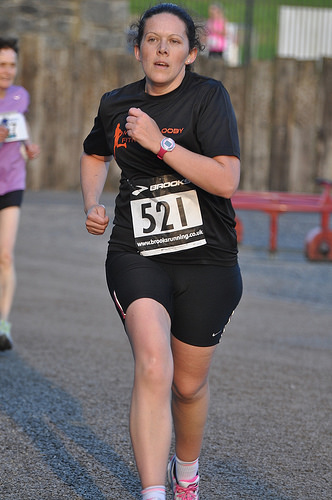
Round four – Mullingar Road League 2014

Image by Peter Mooney
This is a photograph from the 4th and final round of the Mullingar Road League which was held in Belvedere Property and Gardens, Mullingar, Co. Westmeath, Ireland on Wednesday 28th Might 2014 at 20:00. This was the final race in the 2014 series. A music festival had been held in the grounds of Belvedere House on the preceding weekend and there was concerns that the race tonight would have to be moved outdoors the gardens. Nonetheless the ground-staff and Mullingar Harriers worked challenging to make certain that the race could go ahead and stick to it’s regular route. The race follows the roads and trails around Belvedere and is a very testing 5KM route. The race is promoted by Mullingar Harriers for the Pat Finnerty Memorial Cup. Competitors require to run three races out of the four races in May (any order) to be regarded in the overall placing in categories at the conclusion of the league. More than 350 folks took portion in tonight’s occasion. The climate was completely summery with lovely warm sunshine with tiny or no breeze. Excellent operating situations. The presentations for the end of the league and a vast array of refreshments were offered afterwards in the Cafe. Runners have been able to keep around and chat in the evening sunshine. The Mullingar Road League 2014 will go down as an additional accomplishment in the history of this fantastic series.

We have an substantial set of photographs from today in the following Flickr Album: www.flickr.com/pictures/peterm7/sets/72157644840050706/

Timing and event management was offered by Precision Timing. Final results are accessible on their site at www.precisiontiming.net/result/racetimer with additional material available on their Facebook page (www.facebook.com/davidprecisiontiming?fref=ts) See their promotional video on YouTube: www.youtube.com/watch?v=c-7_TUVwJ6Q

Reading on a Smartphone or tablet? Don’t overlook to scroll down further to study far more about this race and see crucial Net links to other information about the race! You can also uncover out how to access and download these photographs.

Our photographs from Round 1 of the 2014 Road League on Flickr: www.flickr.com/photos/peterm7/sets/72157644508131856/
Our photographs from Round 2 of the 2014 Road League on Flickr: www.flickr.com/images/peterm7/sets/72157644261638039/
Our photographs from Round 3 of the 2014 Road League on Flickr: www.flickr.com/photographs/peterm7/sets/72157644769714481/
Road League 2014 Facebook Page: www.facebook.com/patfinnertyroadleague?fref=ts (Demands Facebook logon)
YouTube Video for the Promotion of the 2014 Road League: www.youtube.com/watch?v=KfvVVwrkgTM
A Vimeo Video for the Promotion of the 2013 Road League: vimeo.com/64875578
Our photographs from Round five of the 2013 Road League on Flickr: www.flickr.com/photographs/peterm7/sets/72157633794985503/
Our photographs from Round 4 of the 2013 Road League on Flickr: www.flickr.com/pictures/peterm7/sets/72157633604656368/
Our photographs from Round 3 of the 2013 Road League on Flickr: www.flickr.com/images/peterm7/sets/72157633470510535/
Our photographs from Round two of the 2013 Road League on Flickr: www.flickr.com/images/peterm7/sets/72157633451422506/
Our photographs from Round 1 of the 2013 Road League on Flickr: www.flickr.com/photographs/peterm7/sets/72157633397519242/
Belvedere Home and Gardens on Google Street View: goo.gl/maps/WWTgD
Chip Timing Results from Precision Timing: www.precisiontiming.net/result/racetimer
Belvedere Home and Gardens Website: www.belvedere-house.ie/
Mullingar Harriers Facebook Group Web page: www.facebook.com/groups/158535740855708/?fref=ts
Our Flickr Collection from Mullingar Road League 2012 (1,800 photographs) www.flickr.com/pictures/peterm7/collections/72157629780992768/
Our Flickr Collection from Mullingar Road League 2011 (820 photographs) www.flickr.com/photographs/peterm7/collections/72157626524444213/
Our Flickr Collection from Mullingar Road League 2010 (500 photographs) www.flickr.com/pictures/peterm7/collections/72157624051668808/
Our Flickr Collection from Mullingar Road League 2009 (250 photographs) www.flickr.com/photographs/peterm7/collections/72157617814884076/
Our Flickr Collection from Mullingar Road League 2008 (150 photographs) www.flickr.com/photos/peterm7/collections/72157605062152203/

Can I use these photographs straight from Flickr on my social media account(s)?

Yes – of course you can! Flickr gives numerous methods to share this and other photographs in this Flickr set. You can share to: e-mail, Facebook, Pinterest, Twitter, Tumblr, LiveJournal, and WordPress and Blogger weblog sites. Your mobile, tablet, or desktop device will also offer you you many various possibilities for sharing this photo page on your social media outlets.

We take these photographs as a hobby and as a contribution to the running neighborhood in Ireland. Our only &quotcost&quot is our request that if you are utilizing these pictures: (1) on social media websites such as Facebook, Tumblr, Pinterest, Twitter,LinkedIn, Google+, etc or (2) other internet sites, blogs, net multimedia, industrial/promotional material that you need to supply a hyperlink back to our Flickr page to attribute us.

This also extends the use of these photos for Facebook profile pictures. In these circumstances please make a separate wall or blog post with a hyperlink to our Flickr page. If you do not know how this need to be carried out for Facebook or other social media please e-mail us and we will be pleased to aid suggest how to link to us.

I want to download these images to my personal computer or device?

You can download the photographic image right here direct to your pc or device. This version is the low resolution internet-quality image. How to download will differ slight from device to device and from browser to browser. Nevertheless – look for a symbol with three dots ‘ooo’ or the hyperlink to ‘View/Download’ all sizes. When you click on either of these you will be presented with the selection to download the image. Remember just doing a correct-click and &quotsave target as&quot will not work on Flickr.

I want get complete resolution, print-good quality, copies of these photographs?

If you just need to have these photographs for on-line usage then they can be employed directly once you respect their Inventive Commons license and give a hyperlink back to our Flickr set if you use them. For offline usage and printing all of the photographs posted here on this Flickr set are accessible free of charge, at no cost, at complete image resolution.

Please e mail petermooney78 AT gmail DOT com with the links to the photographs you would like to receive a full resolution copy of. We also ask race organisers, media, and so on to ask for permission just before use of our photos for flyers, posters, and so forth. We reserve the correct to refuse a request.

In summary please keep in mind when requesting photographs from usIf you are using the photographs on-line all we ask is for you to give a hyperlink back to our Flickr set or Flickr pages. You will uncover the link above clearly outlined in the description text which accompanies this photograph. Taking these photographs and preparing them for on the internet posting does take a significant effort and time. We are not posting photographs to Flickr for industrial motives. If you genuinely like what we do please spread the link about your social media, send us an email, leave a comment beside the photographs, send us a Flickr e-mail, etc. If you are making use of the photographs in newspapers or magazines we ask that you mention where the original photograph came from.

I would like to contribute one thing for your photograph(s)?
A lot of folks offer you payment for our photographs. As stated above we do not charge for these photographs. We take these photographs as our contribution to the operating neighborhood in Ireland. If you really feel that the photograph(s) you request are excellent enough that you would take into account paying for their purchase from other photographic providers or in other circumstances we would recommend that you can give a donation to any of the excellent charities in Ireland who do work for Cancer Care or Cancer Analysis in Ireland.

We use Creative Commons Licensing for these photographs
We use the Inventive Commons Attribution-ShareAlike License for all our photographs right here in this photograph set. What does this imply in reality?
The explaination is quite basic.
Attribution– anybody making use of our photographs gives us an acceptable credit for it. This ensures that men and women are not taking our photographs and passing them off as their own. This typically just imply placing a link to our photographs somewhere on your site, weblog, or Facebook where other people can see it.
ShareAlike – any individual can use these photographs, and make alterations if they like, or incorporate them into a larger project, but they must make those modifications available back to the community beneath the very same terms.

Inventive Commons aims to encourage inventive sharing. See some examples of Inventive Commons photographs on Flickr: www.flickr.com/creativecommons/

I ran in the race – but my photograph does not seem here in your Flickr set! What offers?

As pointed out above we take these photographs as a hobby and as a voluntary contribution to the operating community in Ireland. Quite typically we have really ran in the identical race and then switched to photographer mode after we finished the race. Consequently, we feel that we have no obligations to capture a photograph of each participant in the race. Even so, we do attempt our very best to capture as numerous participants as possible. But this is occasionally not achievable for a selection of motives:

&nbsp&nbsp&nbsp&nbsp &#9658You had been hidden behind an additional participant as you passed our camera
&nbsp&nbsp&nbsp&nbsp &#9658Weather or lighting situations meant that we had some photographs with blurry content which we did not upload to our Flickr set
&nbsp&nbsp&nbsp&nbsp &#9658There have been as well a lot of people – some races attract thousands of participants and as amateur photographs we can’t hope to capture photographs of every person
&nbsp&nbsp&nbsp&nbsp &#9658We just missed you – sorry about that – we did our greatest!

You can email us petermooney78 AT gmail DOT com to enquire if we have a photograph of you which did not make the final Flickr selection for the race. But we cannot promise that there will be photograph there. As alternatives we advise you to get in touch with the race organisers to enquire if there have been (1) other photographs taking photographs at the race occasion or if (two) there had been specialist commercial sports photographers taking photographs which may have some photographs of you available for purchase. You may well discover some hyperlinks for further data above.

Don’t like your photograph here?
That is OK! We realize!

If, for any explanation, you are not happy or comfy with your picture appearing here in this photoset on Flickr then please email us at petermooney78 AT gmail DOT com and we will remove it as soon as possible. We give careful consideration to every photograph before uploading.

I want to inform folks about these excellent photographs!
Fantastic! Thank you! The ideal hyperlink to spread the word around is probably http://www.flickr.com/peterm7/sets

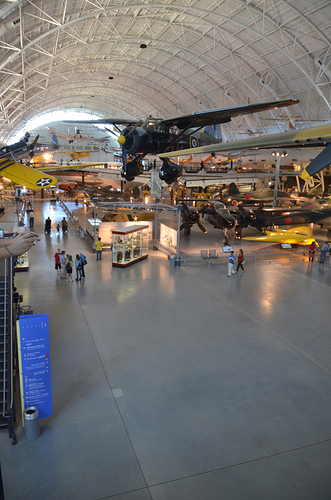
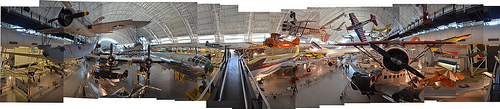
Steven F. Udvar-Hazy Center: major hall panorama

Image by Chris Devers
See far more images of this, and the Wikipedia write-up.

Particulars, quoting from Smithsonian National Air and Space Museum: Steven F. Udvar-Hazy | _specifics_pending_:

Cool Machined Components Manufacturers images

Cool Machined Components Manufacturers images

A handful of good machined components companies pictures I discovered:

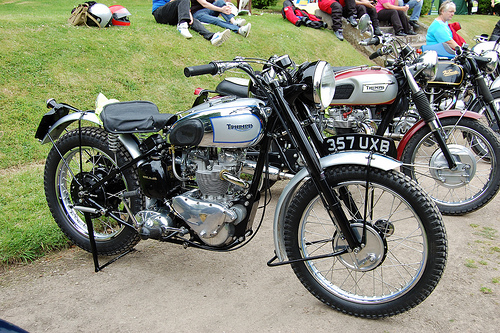
TRIUMPH TROPHY TR5. REAR IN HUB SUSPENSION. 500 CC TWIN CYLINDER.

Image by ronsaunders47
The Triumph TR5 Trophy was a British motorcycle produced by Triumph Motorcycles at their Meriden factory. Based on the Triumph Speed Twin, the TR5 was a trials machine created for off road use with a higher level two into a single exhaust and very good handling on public roads. [1] The name ‘Trophy’ came from the three ‘specials’ that Triumph built for the Italian International Six Day Trials in 1948, which went on to win 3 gold medals and the manufacturers group trophy.[two] Featuring prominently in the AMC &quotClass C&quot racing till 1969, the American export models included elements from rhe Triumph Tiger 100 to generate a motorcycle for desert competitors.[three]

From 1951 the 498cc engine (utilised as aircraft generators throughout World War II was updated with a new alloy barrels and heads. The TR5 was replaced with a new variety of unit building twins in 1959.[two] The Trophy name was resurrected for the Triumph TR6 Trophy in 1970 and the Trophy 500 (T100C) in 1971, which in turn was replaced by the Triumph Trophy Trail (TR5T) in 1973. The Hinckley Triumph organization employed the Trophy name for the Triumph Trophy 900 and Triumph Trophy 1200 models.

Renowned Riders
The Fonz , a character played by Henry Winkler in the well-known and lengthy operating American sit-com Pleased Days rode a Triumph TR5 Trophy. Both the character and bike were available as an MPC model kit in the 1970s.

In an attempt to ape Marlon Brando and his 6T Triumph Thunderbird, James Dean bought a Triumph TR5 Trophy. Phil Stern’s popular series of photographs of Dean show him upon this bike which although sold right after the actor’s untimely death, was recovered and restored prior to getting displayed at the James Dean Museum in Fairmount, Indiana.

Ten Inquiries with Sara Roversi, Co-Founder of You Can Group

Ten Inquiries with Sara Roversi, Co-Founder of You Can Group
It is by way of the power of food that we can with each other find the solutions to our pressing worldwide concerns, and agriculture is our beginning point. FT: What do … Collaboration sparks innovation, and at the Future Food Institute, we support entrepreneurship …
Study a lot more on Meals Tank (weblog)

Data creating farming a matter of precision
It can support farmers apply fertilizer only exactly where it&#39s required, keep away from under or more than-seeding hard regions like irregular field edges, accurately measure the productivity of each and every part of a field, and use each square inch of land to create a profit …
Study far more on Jacksonville Journal Courier

&#39Multinational corporations&#39 aren&#39t the only beneficiaries of Trans-Pacific
By turning the concentrate on &quotmultinational corporations&quot – an simple villain in bike-riding, wine-drinking, regional-loving Portland, foes have succeeded in planting doubts about the agreement that liberalizes trade and investment in between the United States and …
Study far more on OregonLive.com

Stuart Derdeyn&#39s record critiques for Friday, March 25

Stuart Derdeyn&#39s record reviews for Friday, March 25
Copper Wire is a prime example of Hinton&#39s cracking craft with a pure Leading 40 EDM vocal loop up against 808 handclap drills, big synth washes and a spit verse about setting targets from a young age only to see items alter. Later on Five 4 brings …
Study more on Regina Leader-Post

This Week in Machinery: Subsequent Gen Machining, Engine-Driven Plasma Cutting and More
The ONA AV variety is the latest wire electrical discharge machine (EDM) from ONA and features a number of advances over the previous generation. A new CAM CNC enables up to 8 axes to be controlled simultaneously and has constructed-in CAD/CAM and a&nbsp…
Read more on ENGINEERING.com

Apple-Dubset Deal Marks A Rights-Tech Milestone
The deal, which relies on Dubset&#39s proprietary technologies for identifying the person tracks used in extended mixes and creating payments to the suitable rights owners, marks a milestone for electronic dance music (EDM) and other sorts of …
Read much more on Digital Media Wire

Cool Surface Grinding Solutions photos

Cool Surface Grinding Solutions photos

A few good surface grinding services pictures I discovered:

Steven F. Udvar-Hazy Center: Photomontage of Overview of the south hangar, such as B-29 “Enola Gay” and Concorde

Image by Chris Devers

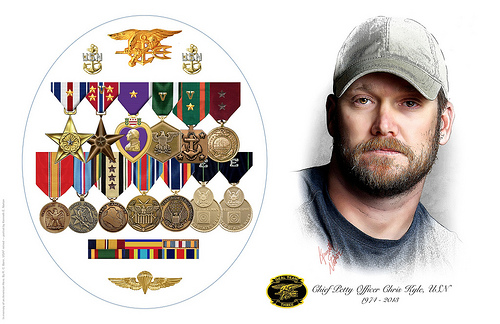
Memorial to the memory of CPO (SEALS) Chris Kyle, USN, SEAL Team three

Image by The Pleased Rower
This is memorial a display of Chris Kyle’s decorations and service medals and ribbons in honor of his dedicated and loyal service to America as a Navy sniper in Iraq guarding US Marines from these who would kill them. The moving movie &quotAmerican Sniper&quot is primarily based on his autobiography, also containing narrative from his wife Taya. He served in the Navy 1999-2009.

Chris’ biography is at this hyperlink: en.wikipedia.org/wiki/Chris_Kyle

The spectacular portrait of Chris is by Kenneth E. Norton who has a web site at Deviant Art at this link: kenernest63a.deviantart.com/

The display at left has the Navy Particular Warfare Badge (SEALS) at best, also referred to has the SEAL Trident badge. On either side are the insignia of a Navy Chief Petty Officer, his rank. At the bottom of the display is the Navy Parachutist Badge. Under his portrait is the emblem of Chis’ unit, SEAL Team Three.

The very first row of medals are from left to right: The Silver Star with gold star indicating a second award (America’s third highest award for valor in combat behind the Medal of Honor and the Navy Cross) the Bronze Star with V for valor, and 4 gold stars indicating an added awards of this medal the Purple Heart with gold star for a second award the Navy/Marine Corps Commendation Medal with V device for bravery the Navy/Marine Corps Achievement Medal with V device for bravery and gold star for a second award the Navy Good Conduct Medal with two bronze stars for added awards.

The second row of medals are left to right: The National Defense Service Medal the Armed Forces Expeditionary Service Meda the Irag Campaign Medal with 4 bronze stars indicating he served in five combat campaign periods the Worldwide War on Terrorism Expeditionary Medal the International War on Terrorism Service Medal the Navy Expert Rifleman Marksmanship Medal with E device to indicate attainment of the highest level of accuracy the Navy Specialist Pistol Marksmanship Medal with E device.

The ribbons under the medals are not awarded as medals. Best row left to appropriate: The Navy/Marine Corps Combat Action ribbon indicating active participation in ground or surface combat the Presidential Unit Citation awarded to units of the US Armed Forces, and these of allied nations, for extraordinary heroism in action against an armed enemy the Joint Meritorious Unit Award for service with a cited joint military unit. Bottom row left to right: the Navy Unit Commendation ribbon awarded by the Secretary of the Navy to a unit of the Navy or Marine Corps which distinguished itself in action against the enemy with outstanding heroism the Navy Sea Service Deployment ribbon the Navy/Marine Corps Overseas Service ribbon.

This display was proportioned to match 11&quot x 17&quot Tabloid format.

Doorwerth NL – Kasteel Doorwerth 05

Doorwerth NL – Kasteel Doorwerth 05

Some cool gear grinding photos:

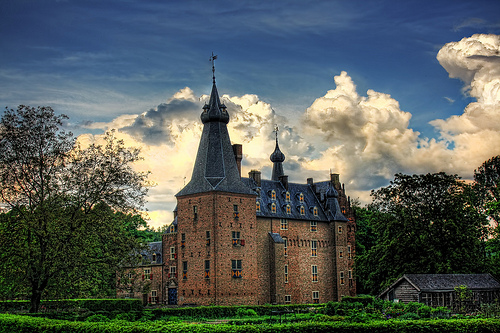
Doorwerth NL – Kasteel Doorwerth 05

Image by Daniel Mennerich
The original castle, almost certainly wooden, is initial described in 1260 when it was besieged and burned to the ground, soon after which it was rebuilt in stone. In 1280 this second castle was once more besieged and this time the bailey was burned down. This castle probably consisted of a straightforward hall-maintain, two stories higher with 1.20 meter thick walls, and featured a surrounding moat which was fed by the nearby river Rhine.

During the 14th century the castle was continually enlarged. Doorwerth Castle was initially the property of the Van Dorenweerd loved ones. In 1402 Robert van Dorenweerd committed the castle to the Count of Gelre, Reinald IV. In return Robert was granted the castle and its land in fief. About the middle of the 15th century the castle was enlarged again, this time by knight Reinald van Homoet, the 10th Lord of Dorenweerd, who was also the owner of Doornenburg Castle.

Doorwerth Castle reached its largest kind just following the middle of the 16th century below Daem Schellart van Obbendorf, the 15th Lord of Dorenweerd. He made the castle and the group of buildings on the bailey into a unity and adjusted them for far more space and comfort. By 1560 Doorwerth Castle had almost reached its present appearance. About 1637 the bailey was rebuilt to its present look and a dike was built around the castle to protect it from flooding of the river Rhine.

Shortly soon after, the castle changed ownership due to monetary troubles and was granted in fief to a German Count, Anton I van Aldenburg. His successors did not alter the castle or bailey but did acquire far more land. At the finish of the 18th century the castle was no longer inhabited, but was looked soon after by a steward for its owners who now lived in England.

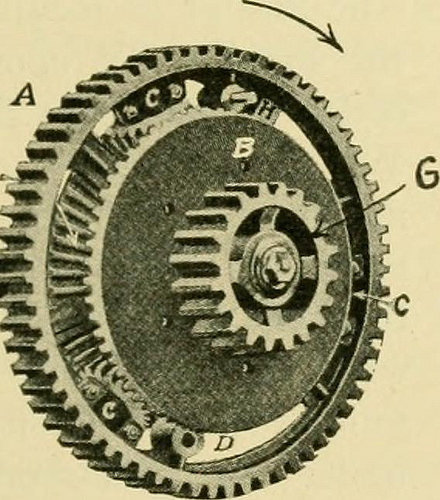
Image from web page 463 of “Farm machinery and farm motors” (1908)

Image by Net Archive Book Images
Identifier: farmmachineryfar00davi
Title: Farm machinery and farm motors
Year: 1908 (1900s)
Authors: Davidson, Jay Brownlee Chase, Leon Wilson
Subjects: Agricultural machinery
Publisher: New York, O. Judd firm [etc., and so on.]
Contributing Library: The Library of Congress
Digitizing Sponsor: Sloan Foundation

View Book Web page: Book Viewer
About This Book: Catalog Entry
View All Images: All Images From Book

Click right here to view book on the internet to see this illustration in context in a browseable on the internet version of this book.

Text Appearing Ahead of Image:
turn will propel the drivewheels. But if the drivewheel attached to pinion Ghappens to travel more quickly thanthat attached to shaft F the^^^^. , pinion C will revolve and ^9^^EB^^^£.^^SJliL ^^^^^ ^^^ pinion A will propel^^^^S»^BSi^rtF«»c the gearing. Usually there are some very severe jerks onthe transmission gearing ofan engine and some com-panies are now inserting intheir compensating gears aset of springs which take this jar off the gearing. 590. Traction.—Any traction engine has energy enoughto propel itself more than the road and through the fields pro-vided the drive wheels do not slip. Consequently thematter of the wheels adhering to the ground is an im-portant part. Exactly where the road surface is firm there is nodifficulty but in a soft field fantastic problems is experienceddue to the truth that the lugs of the drive wheels tear upthe earth and enable the drive wheels to move withoutmoving the engine. It is a typical belief that the driv^ewheel which has the sharpest lug is the one particular which will

Text Appearing Soon after Image:
FIG- 335—COMPENSATING GEARS 452 FARM MOTORS adhere to the ground the very best. In nearly all instances thisis not accurate, since the lug which is sharp is really apt to cutthrough the earth, whilst a single which is dull or round anddoes not have such penetrating effect will pack the earthdown and thus make far more resistance for itself whilepassing via the earth. Nearly every single engine builderhas a style of lug of his own. Fig. 338 shows a newstyle of traction wheel which appears to be providing verygood results. The more weight that can be put on tothe drive wheels of an engine the much better it will adhereto the ground, providing the surface is firm enough tosupport the load. This makes the matter of location of the major axles upon theboiler an essential element.When the boiler is rear-mounted it is clear thatmore of the weight isthrown upon the frontwheels, which act as aguide, than when thePjg ^,g boiler is side-mounted. Therefore one would be led tobelieve that the side-mounted traction engine will havebetter

Note About Images
Please note that these pictures are extracted from scanned web page photos that may have been digitally enhanced for readability – coloration and appearance of these illustrations may not completely resemble the original function.

Cool Metal Grinding pictures

Cool Metal Grinding pictures

A few nice metal grinding images I discovered:

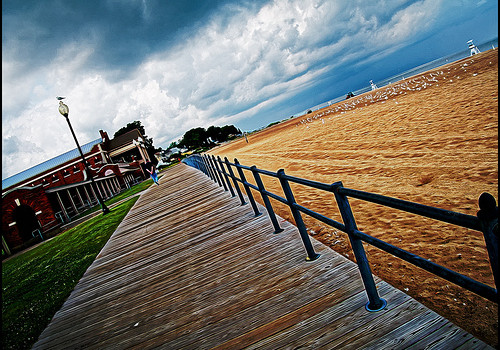
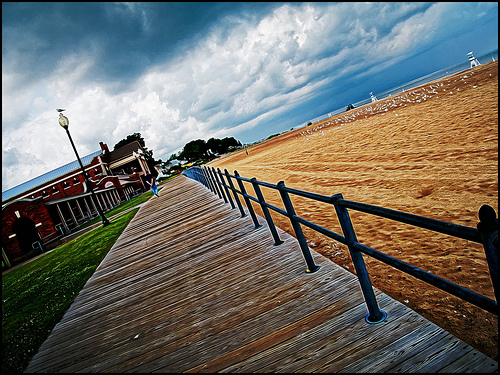
Light fled the approaching storm pensively he passed below sentinel’s watch into its maelstrom

Image by henk.sijgers (on when I can)
South shore of Lake Ontario
Rochester NY, Summer 2014

Panasonic GM1 camera
Panasonic 12-32 lens

Pixelmator
-DXO prepped base
-Topaz Impression soft light blend layer
-Topaz Glow masked linear light blend layer
-Sharpen sky blend layer
-Median blur ground blend layer
Nik ColorEfex (border, vignette)

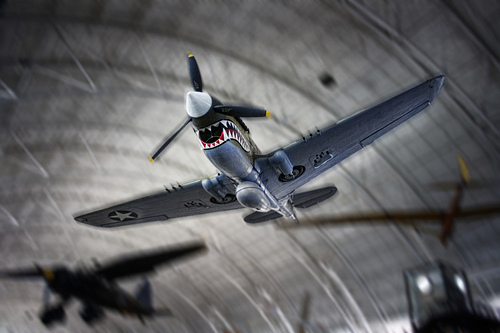
Chantilly VA – Steven F. Udvar-Hazy Center – Curtiss P-40E Kittyhawk 03

Image by Daniel Mennerich
The Curtiss P-40 Warhawk was an American single-engine, single-seat, all-metal fighter and ground attack aircraft that first flew in 1938. The P-40 style was a modification of the previous Curtiss P-36 Hawk which reduced development time and enabled a rapid entry into production and operational service. The Warhawk was used by the air forces of 28 nations, including these of most Allied powers during Globe War II, and remained in front line service until the end of the war. It was the third most-developed American fighter, following the P-51 and P-47 by November 1944, when production of the P-40 ceased, 13,738 had been built, all at Curtiss-Wright Corporation’s principal production facilities at Buffalo, New York.

Donald S. Lopez, Sr. ( July 15, 1923 — March 3, 2008) was a former U.S. Army and U.S. Air Force fighter and test pilot and till his death the deputy director of the Smithsonian National Air and Space Museum.

Emerging Tentacles

Image by Theen …
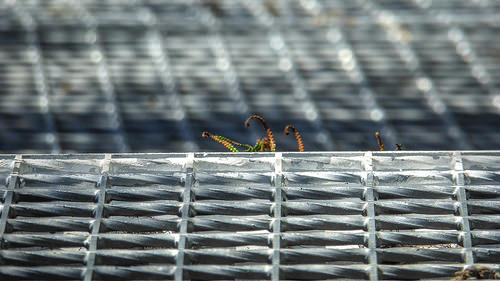
Grating more than a ditch in the bush, somewhere on North Head Scenic Drive with some curls of fern peeping over it. The grating was to give passengers alighting from the bus traction over a slippery bit.

Image from web page 76 of “Kramer’s book of trade secrets for the manufacturer and jobber a total compilation of valuable information and formulae for manufacturing all types of flavoring extracts, baking powders, jellies ..” (1905)

Image from web page 76 of “Kramer’s book of trade secrets for the manufacturer and jobber a total compilation of valuable information and formulae for manufacturing all types of flavoring extracts, baking powders, jellies ..” (1905)

Verify out these machining manufacturer images:

Image from page 76 of “Kramer’s book of trade secrets for the manufacturer and jobber a complete compilation of beneficial data and formulae for manufacturing all types of flavoring extracts, baking powders, jellies ..” (1905)

Image by Web Archive Book Photos
Identifier: kramersbookoftra00kram
Title: Kramer’s book of trade secrets for the manufacturer and jobber a complete compilation of useful details and formulae for manufacturing all sorts of flavoring extracts, baking powders, jellies ..
Year: 1905 (1900s)
Authors: Kramer, Adolph, comp
Subjects: Recipes cbk
Publisher: Sutherland, Ia., Sioux publishing organization
Contributing Library: The Library of Congress
Digitizing Sponsor: Sloan Foundation

View Book Web page: Book Viewer
About This Book: Catalog Entry
View All Photos: All Pictures From Book

Click here to view book on the web to see this illustration in context in a browseable on the internet version of this book.

Text Appearing Before Image:
209-211 S. Clinton St.CHICAGO, ILLINOIS ^AAAAAAAAAAAAAAAAAAAAAAAAAAAAAAAAAAAAAA^ She – We Can Inform Precise Ingredientsof Any Item ^» ^» Do you locate exadly whatyoti want in tnis booR? Do you want to reproduce any specific solution? We analyze anything and can inform the constituents of anycompound or mixture, any ore, metal, alloy, and so on. We treat all inquiries confidentially and furnish absolutelyreliable info, make analysis, assays,-and so forth., at rates thelowest constant with the highest good quality of work. If you want to know the properties of any compound youare preparing to market place it will spend you to seek the advice of us. We employ only chemists who have graduated from repu-table colleges and who have had extended, practical expertise intheir profession. Our laboratories are among the largest andmost entirely equipped of any in the United States and weare ready to give you prompt interest to all inquiries. ^» ^» Max D. Slimmer, PH. D TShe Ellsworth Laboratories Ellsworth Bide., Chicago

Text Appearing Following Image:
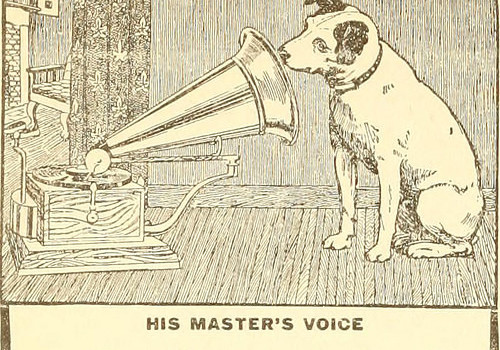
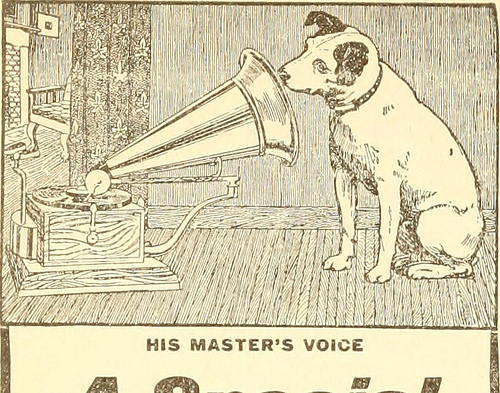
A Smsbc VICTOR Provide To any accountable reader of this paperwho will furnish us with references if werequest it, we will ship on Totally free TRIALthe latest model of our Victor RoyalTalking Machine with Unique Exhi-bition Sound Box and your choice of anydozen Victor Records in the catalogue for. Attempt it for a day in your home—if itssatisfactory send us and pay us thebalance .§£A Month For Six Months Unique Notice ^victo^S each and every property in the West, and we will if easyterms will do it. You run no danger, NoC. O. I».or deposit essential. We trust you completely.We ship the machine and records direct to youon completely free trial withoutany conditionswhatever. If it is satisfactory and you make a decision tokeep it, basically spend us as agreed. The Viator Speaking Itf3g&ampt*&amptitt8* is conceded by everyoneIVM*M1rKM&ampSVt&amp tne very best to be had. AtBuffalo and again at St. Louis it was awardedHighest Honors—Gold Medal and 1st prize We guarantee each machine tobe a genuine Victor and the pri

Note About Images
Please note that these images are extracted from scanned web page photos that might have been digitally enhanced for readability – coloration and appearance of these illustrations could not perfectly resemble the original operate.

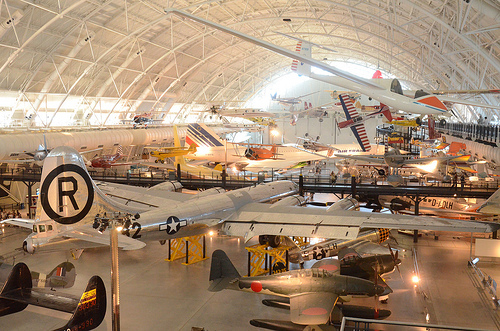
Steven F. Udvar-Hazy Center: View of south hangar, like B-29 Superfortress “Enola Gay”, a glimpse of the Air France Concorde, and several other folks

Image by Chris Devers
Quoting Smithsonian National Air and Space Museum | Boeing B-29 Superfortress &quotEnola Gay&quot:

Boeing’s B-29 Superfortress was the most sophisticated propeller-driven bomber of World War II and the initial bomber to house its crew in pressurized compartments. Despite the fact that made to fight in the European theater, the B-29 located its niche on the other side of the globe. In the Pacific, B-29s delivered a assortment of aerial weapons: conventional bombs, incendiary bombs, mines, and two nuclear weapons.

On August six, 1945, this Martin-constructed B-29-45-MO dropped the initial atomic weapon used in combat on Hiroshima, Japan. Three days later, Bockscar (on show at the U.S. Air Force Museum close to Dayton, Ohio) dropped a second atomic bomb on Nagasaki, Japan. Enola Gay flew as the advance weather reconnaissance aircraft that day. A third B-29, The Fantastic Artiste, flew as an observation aircraft on both missions.

Transferred from the United States Air Force.

Manufacturer:
Boeing Aircraft Co.
Martin Co., Omaha, Nebr.

Date:
1945

Nation of Origin:
United States of America

Dimensions:
Overall: 900 x 3020cm, 32580kg, 4300cm (29ft 6 5/16in. x 99ft 1in., 71825.9lb., 141ft 15/16in.)

Components:
Polished general aluminum finish

Physical Description:
4-engine heavy bomber with semi-monoqoque fuselage and high-aspect ratio wings. Polished aluminum finish overall, normal late-World War II Army Air Forces insignia on wings and aft fuselage and serial number on vertical fin 509th Composite Group markings painted in black &quotEnola Gay&quot in black, block letters on decrease left nose.

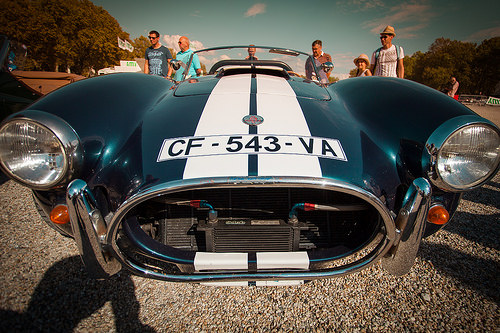
AC Cobra

Image by _ alt3 _
The AC Cobra, sold as the Ford/Shelby AC Cobra in the United States and often known colloquially as the Shelby Cobra in that country, is an American-engined British sports auto produ
ced intermittently given that 1962.

Like numerous British specialist manufacturers, AC Automobiles had been employing the Bristol straight-six engine in its modest-volume production, such as its AC Ace two-seater roadster. This had a hand-constructed physique with a steel tube frame, and aluminium physique panels that had been produced using English wheeling machines. The engine was a pre-Planet War II design and style of BMW which by the 1960s was considered dated. Bristol decided in 1961 to cease production of its engine and instead to use Chrysler 331 cu in (5.4 L) V8 engines. AC began utilizing the 2.6 litre Ford Zephyr engine in its cars. In September 1961, American automotive designer Carroll Shelby wrote to AC asking if they would build him a automobile modified to accept a V8 engine. AC agreed, provided a appropriate engine could be discovered. Shelby went to Chevrolet to see if they would offer him with engines, but not wanting to add competitors to the Corvette they mentioned no. Even so, Ford wanted a vehicle that could compete with the Corvette and they occurred to have a brand new engine which could be employed in this endeavor: Ford’s 260 in HiPo (4.2 L) engine – a new lightweight, thin-wall cast modest-block V8 tuned for high efficiency. Ford offered Shelby with two engines. In January 1962 mechanics at AC Vehicles in Thames Ditton, Surrey fitted the prototype chassis CSX2000 with a 260 ci Ford V8 borrowed from Ford in the UK the 221 ci was by no means sent. Even so, early engineering drawings had been titled &quotAC Ace 3.6&quot. Right after testing and modification, the engine and transmission were removed and the chassis was air-freighted to Shelby in Los Angeles on 2 February 1962. His team fitted it with an engine and transmission in much less than eight hours at Dean Moon’s shop in Santa Fe Springs, California, and started road-testing.